Namibia has taken a decisive step toward allowing Starlink to operate legally in the country, with the telecoms regulator formally opening a review of the satellite provider’s licence applications.
The Communications Regulatory Authority of Namibia placed Starlink’s submissions in the government’s Official Gazette at the end of November, triggering a two-week period for public comment and edging the service closer to full approval.

The move marks a shift in tone from earlier this year, when the regulator ordered the company to halt its activities after concluding it had begun offering connectivity without the required telecommunications licence.
Starlink is now seeking a national permit that would allow it to roll out its high-speed broadband system across Namibia using its low-Earth orbit satellites, alongside a separate application for spectrum access in the 10.7 to 14.7 GHz range. CRAN has not yet disclosed any proposed fees or financial terms.
For the regulator, the renewed engagement reflects a wider effort to tackle stubborn gaps in rural coverage.
CRAN’s Director General, Emilia Nghikembua, has repeatedly argued that parts of the country remain too vast and too sparsely populated for conventional mobile networks to reach them.
Large farming districts, remote lodges and settlements spread over millions of hectares continue to sit outside existing coverage.
Although roughly 91 percent of Namibians have access to 2G, 3G or 4G services, most of that connectivity is concentrated in urban and peri-urban areas.
The remaining nine percent, scattered across one of Africa’s most lightly populated nations, has long represented a challenge for both state-owned operators and private firms.
Competition in the market is also starting to heat up.
MTC and Telecom Namibia have dominated the industry for years, but Paratus, once focused on fixed-line customers, switched on its own 4G mobile network in September and has begun widening its footprint.
Starlink, which has expanded quickly across Africa since 2022, is positioning itself as an additional layer of capacity that could support both consumers and operators in places where terrestrial networks fall short.
Across the continent, the company has been steadily gaining ground.
It has secured fresh regulatory approvals in Lesotho, Somalia and the Democratic Republic of Congo and has built alliances with established technology firms.
Vodacom recently signed an agreement to make Starlink’s service available to business clients in several markets, while a partnership with Cisco and the government of Rwanda aims to deepen digital skills and improve community-level connectivity.
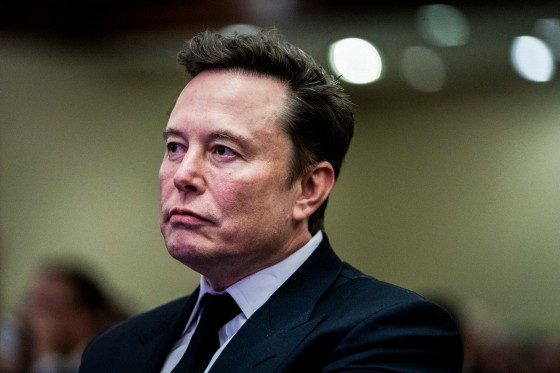
Elon Musk, whose wealth Bloomberg estimates at around 468 billion dollars, has said repeatedly that Starlink will expand into any country where it receives legal clearance.
Namibia’s review of the pending applications is expected to conclude once public submissions are assessed, after which CRAN will determine whether Starlink should receive full authorisation to operate nationwide.