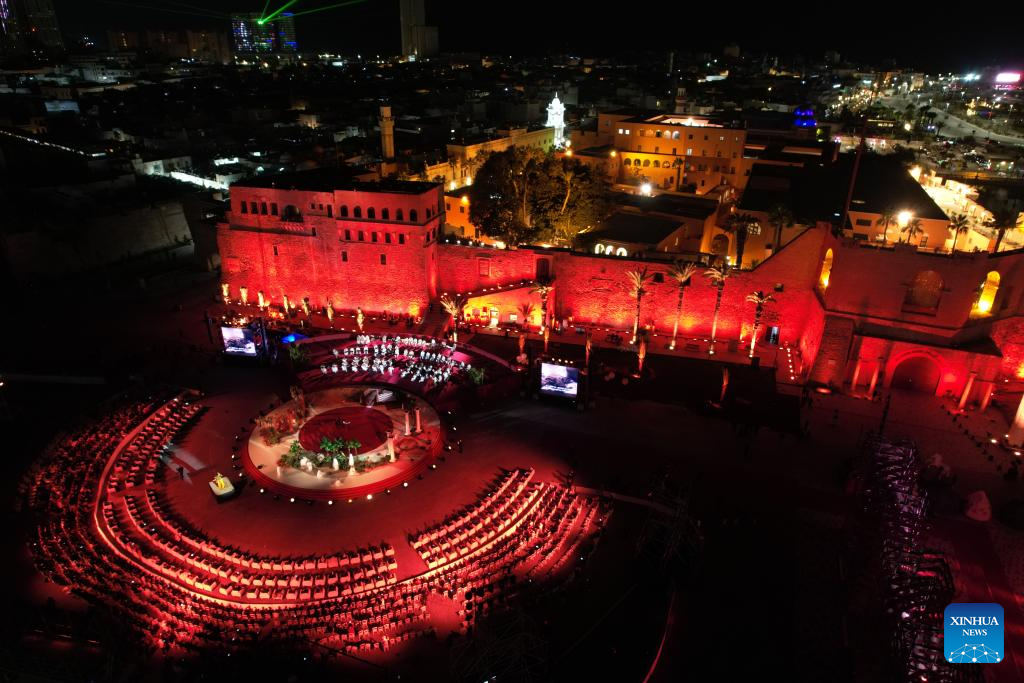
Libya’s national museum, formerly known as As-Saraya Al-Hamra or the Red Castle, has reopened in Tripoli, allowing the public access to some of the country’s finest historical treasures for the first time since the revolt that toppled Muammar Gaddafi.
The museum, Libya’s largest, was closed in 2011 during a NATO-backed uprising against the longtime ruler.


Renovations began in March 2023 by the Tripoli-based Government of National Unity (GNU), which came to power in 2021 in a U.N.-backed political process.
“The reopening of the National Museum is not just a cultural moment but a live testimony that Libya is building its institutions,” GNU Prime Minister Abdulhamid al-Dbiebah said at the reopening ceremony.
The museum’s 10,000 square meters of gallery space feature mosaics, murals, sculptures, coins, and artifacts dating back to prehistoric times and stretching through Libya’s Roman, Greek, and Islamic periods.
The collection includes millennia-old mummies from ancient settlements in Libya’s deep south and near its eastern border with Egypt.
Libya has recovered 21 artifacts smuggled out after Gaddafi’s fall, with talks ongoing to recover more from Spain and Austria.
The museum is currently prioritizing school visits, with plans to officially open to the public at the beginning of the year.