President Bola Tinubu has approved the cancellation of a large portion of the debts owed by the Nigerian National Petroleum Company Limited (NNPC Ltd) to the Federation Account, wiping off about $1.42bn and N5.57tn following a reconciliation of records between both parties.
The approval is contained in a document prepared by the Nigerian Upstream Petroleum Regulatory Commission (NUPRC) and presented at the November meeting of the Federation Account Allocation Committee (FAAC). The report, titled “Report of October 2025 Revenue Collection Presented at the Federation Account Allocation Committee Meeting Held on 18th November 2025.”


According to the document, NNPC Ltd’s outstanding obligations earlier reported at the October 2025 FAAC meeting stood at $1.48bn and N6.33tn, relating to Production Sharing Contracts (PSC), Direct Sale Direct Purchase (DSDP), Royalty Adjustment (RA), Modified Carry Arrangement (MCA) liftings, as well as Joint Venture (JV) and PSC royalty receivables.
However, the commission disclosed that the Presidency had approved that most of these balances be removed from the Federation’s books.
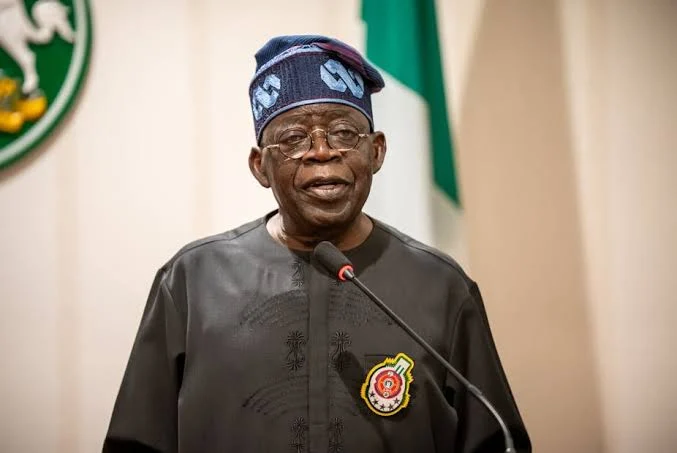
The report stated, “The commission recently received a Presidential Approval to nil off the outstanding obligations of NNPC Ltd as at 31st December 2024 as submitted by the Stakeholder Alignment Committee on the Reconciliation of Indebtedness between NNPC Ltd and the Federation.”
A breakdown showed that out of the $1.48bn and N6.33tn previously recorded, obligations amounting to $1.42bn and N5.57tn were cancelled. This effectively wiped out about 96 per cent of the dollar-denominated debt and 88 per cent of the naira-denominated obligations. The NUPRC confirmed that it had already passed the necessary accounting entries to implement the directive.
The approval followed recommendations by the Stakeholder Alignment Committee, which reviewed NNPC Ltd’s royalty and lifting-related liabilities up to December 31, 2024. The move effectively resolves long-standing disputes over the national oil company’s legacy indebtedness to the Federation.
However, fresh obligations incurred in 2025 remain outstanding. The NUPRC disclosed that statutory debts arising between January and October 2025 stood at $56.81m and N1.02tn. It added that $55m was recovered during the month under review, leaving a balance of $1.8m alongside the naira obligations.
Despite the debt cancellation, the commission is struggling to meet its revenue targets. Data in the document showed that against an approved monthly revenue target of N1.204tn for 2025, the NUPRC recorded N660.04bn in November, resulting in a shortfall of N544.76bn.
Royalty collections, which make up the bulk of upstream revenues, also fell sharply. While the approved monthly royalty target was N1.144tn, only N605.26bn was collected in November, leaving a deficit of N538.92bn.
Cumulatively, as of November 30, 2025, the NUPRC’s approved revenue stood at N13.25tn, while actual collections amounted to N7.60tn, representing a shortfall of N5.65tn. Royalty collections alone recorded a cumulative gap of N5.63tn.
The document also showed a decline in revenue performance compared to October 2025, when N873.10bn was collected.
Meanwhile, disputes over alleged under-remittance of oil revenues by NNPC Ltd remain unresolved. The PUNCH had earlier reported a clash between the oil company and Periscope Consulting, an audit firm engaged by the Nigeria Governors’ Forum, over an alleged $42.37bn under-remittance to the Federation Account between 2011 and 2017.
NNPC Ltd has rejected the audit findings, insisting that all revenues due to the Federation were fully accounted for during the period. However, Periscope Consulting maintains that significant gaps remain, prompting FAAC to direct a joint reconciliation between both parties, a process that is still ongoing.
Experts, including Professor Emeritus of Petroleum Economics, Wumi Iledare, have described the controversy as a legacy issue stemming from weaknesses in Nigeria’s pre–Petroleum Industry Act framework. He noted that stricter implementation of the PIA, real-time monitoring, and independent audits are needed to prevent similar disputes.
The World Bank has also previously accused NNPC Ltd of failing to fully remit oil revenues, warning that this undermines fiscal transparency. It claimed that the company remitted only 50 per cent of revenue gains from fuel subsidy removal, with the rest used to offset past arrears.
Since assuming office, NNPC Ltd Group Chief Executive Officer, Bayo Ojulari, has repeatedly pledged to improve transparency, efficiency, and accountability, assuring Nigerians that the company’s dealings with the Federation Account would fully comply with fiscal rules.