Israel carried out fresh airstrikes on Lebanon early Thursday while intercepting missiles launched from Iran, as the conflict involving the United States and Israel continued to escalate and trigger instability across the Middle East.
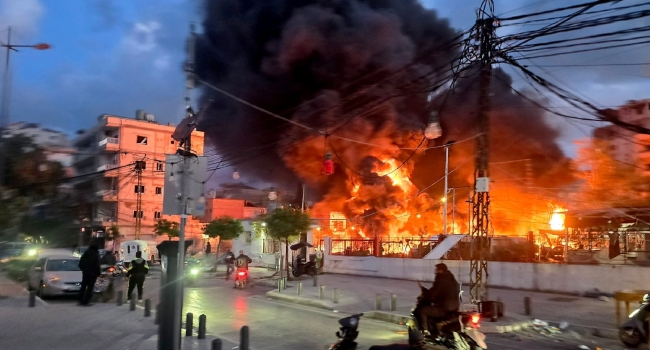
A pre-dawn Israeli airstrike hit a suburb of Beirut known as a stronghold of Hezbollah, the Iran-backed group that has vowed to retaliate following the killing of Iran’s Supreme Leader, Ayatollah Ali Khamenei, at the start of the war last Saturday.

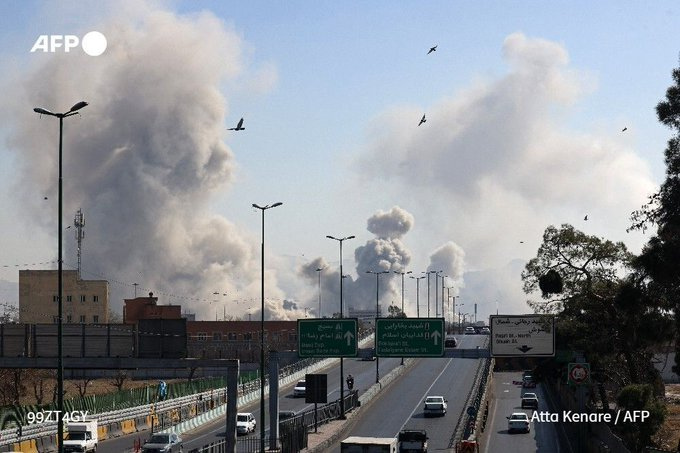
Israel had earlier warned residents to evacuate the targeted area. The Israeli military also confirmed it was working to intercept a new wave of missiles fired by Iran, despite earlier claims by the United States that Tehran’s military capabilities had been significantly weakened.
Iran has promised severe retaliation for the attacks and has launched missiles across several parts of the region. The country’s elite Revolutionary Guards also claimed to have closed the Strait of Hormuz — a critical oil transit route through which about 20 per cent of the world’s crude oil passes.
Iran’s military command warned that the conflict could devastate the region’s infrastructure.
“The Americans’ mischief and deceit could lead to the collapse of the entire military and economic infrastructure of the region,” the military said in a statement.
Energy market intelligence firm Kpler reported that oil tanker traffic through the strait has dropped by about 90 per cent since the escalation began.
Britain’s maritime security agency also reported a major explosion near Kuwait early Thursday, which caused oil to spill into Gulf waters.
Meanwhile, Iraq was plunged into a nationwide electricity blackout after a sudden drop in gas supply to a major power plant, although authorities have not confirmed whether the outage is linked to the conflict.
Iran also launched strikes in Iraq’s autonomous Kurdish region on Wednesday, killing a member of an Iranian Kurdish opposition group in exile. Iranian officials warned separatist groups against attempting to exploit the situation.
In another attack in Iraq, two pro-Iran fighters were killed when their base was struck.
US submarine sinks Iranian warship
The United States said one of its submarines torpedoed an Iranian naval vessel off the coast of Sri Lanka — marking the first US torpedo attack on a ship since World War II.
According to US officials, the Iranian frigate IRIS Dena had been on a diplomatic visit to India when it was targeted.
US Defence Secretary Pete Hegseth described the strike as a decisive military action, saying the ship had believed it was safe in international waters.
Sri Lankan authorities said at least 87 people were killed in the attack, with 61 still missing. Thirty-two sailors were rescued, many of them wounded.
Iran’s state news agency IRNA reported that more than 1,000 people, including civilians and military personnel, have been killed since the conflict began. The figures could not be independently verified.
Tehran also accused US strikes of killing over 150 people, including children, in an attack on a school in the southern town of Minab, though journalists have been unable to independently confirm the claim.
US officials say six American soldiers have died since the fighting began.
Missile incident over Turkey
In a separate development, a missile launched from Iran was intercepted by a NATO air defence system after entering Turkish airspace.
Turkish authorities said the missile had been aimed at a British military base in Cyprus but veered off course.
Turkey condemned the incident and summoned the Iranian ambassador. Foreign Minister Hakan Fidan also urged Iran to avoid actions that could further escalate the conflict during a call with his Iranian counterpart.
Iranian missile strikes have also caused damage and widespread anxiety in several Gulf cities, including Dubai and Riyadh.
Saudi Arabia, the United Arab Emirates and Qatar confirmed they intercepted multiple Iranian missiles and drones on Wednesday, including one that was heading toward the massive Ras Tanura oil refinery in Saudi Arabia.
In Kuwait, an 11-year-old girl was killed by falling shrapnel following a missile interception.
Across the Gulf region, at least 13 people have died since the conflict began, while air travel has been heavily disrupted. The United States has begun evacuation flights for its citizens from the region, following similar moves by France and Britain.
Escalation in Lebanon
In Lebanon, Israeli strikes have killed at least 75 people and forced more than 83,000 residents to flee their homes since the latest escalation began. Israel has urged civilians to evacuate areas south of the Litani River, warning that further military operations could follow.
Airstrikes also hit a hotel in Hazmieh, marking the first reported attack in the predominantly Christian suburb near Beirut’s presidential palace and several foreign embassies.
Video footage also appeared to show Israeli tanks inside the Lebanese town of Khiam, roughly six kilometres from the border.
French President Emmanuel Macron, in a phone call with Israeli Prime Minister Benjamin Netanyahu, warned against launching a ground invasion of Lebanon and urged Israel to respect the country’s territorial integrity.
Macron also held talks with Lebanese leaders, urging them to pressure Hezbollah to halt rocket attacks against Israel. Iran has warned that Israeli embassies worldwide could become targets if Israel attacks Tehran’s diplomatic mission in Lebanon.