Kenya’s government has called for heightened public vigilance following a cholera outbreak that has claimed at least five lives across the country. The warning came from health ministry official, Mary Muthoni, who urged citizens to be aware of their environment and take precautionary measures to prevent further spread of the disease.
Cholera, a dangerous intestinal infection, spreads through contaminated food and water. It causes severe diarrhea, vomiting, and muscle cramps, and can be especially fatal for young children if not treated quickly.

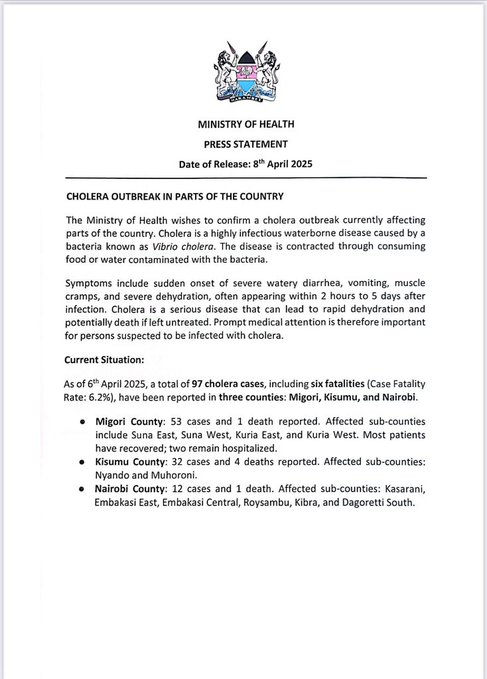
The outbreak follows devastating floods that hit parts of Kenya last year, creating favorable conditions for the disease to spread. As of Tuesday, the Ministry of Health had confirmed 97 cholera cases, including six deaths, reported across Migori, Kisumu, and Nairobi counties.
“The government is asking you to be extremely vigilant of your surroundings… to deal with a cholera outbreak that has now claimed over five lives countrywide,” Muthoni said in an official statement.
The situation mirrors a broader regional health crisis, with cholera outbreaks reported in several East African countries. In South Sudan, the United Nations reported nearly 700 cholera-related deaths last month alone.
Adding to the health challenges, Muthoni also revealed that over 1,000 cases of leishmaniasis—a disease spread by sandflies—have been reported in Kenya, resulting in 33 deaths so far. The disease causes painful skin ulcers and, in some cases, can attack internal organs.
Leishmaniasis is commonly associated with poverty, inadequate sanitation, and poor living conditions, making vulnerable populations particularly at risk.
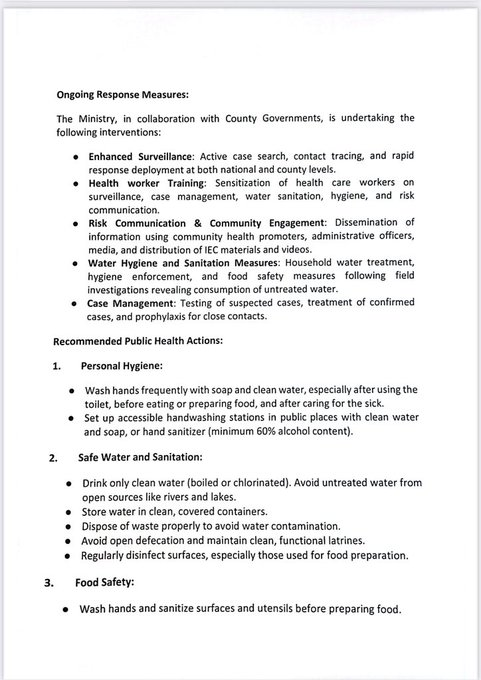
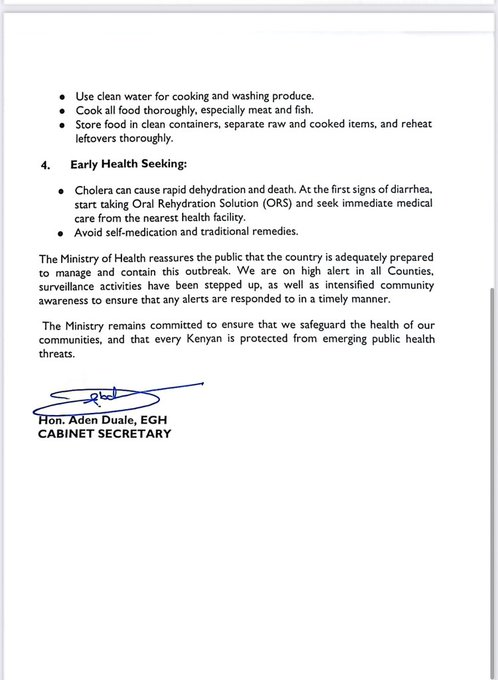
The government continues to monitor both outbreaks closely and is urging the public to observe strict hygiene practices, seek immediate medical attention when symptoms appear, and remain cautious, especially in affected areas.