The Embassy of the Islamic Republic of Iran in Nairobi has issued a strongly worded statement cautioning Kenya against supporting United States and Israeli military actions in the Gulf, while rejecting claims that the Strait of Hormuz has been closed.
The statement comes amid growing international concern over escalating tensions in the Middle East and follows recent remarks by President William Ruto calling for urgent de-escalation in the region. Ruto had warned that the conflict could threaten global peace and economic stability, stressing Kenya’s support for multilateral efforts to restore calm.


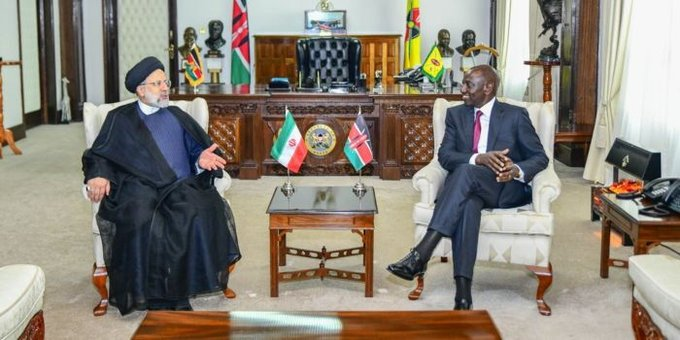
In its March 27, 2026 press release, the Iranian Embassy in Nairobi insisted that maritime traffic through the Strait of Hormuz remains under Iranian oversight and has not been suspended. However, it warned that vessels linked to what it described as “aggressor states” could be treated as hostile.
The embassy’s Public Diplomacy Department described the situation in the Gulf as “highly unsafe, volatile, and unpredictable,” blaming what it called illegal military actions by the United States and Israel for the heightened tensions.
It maintained that maritime navigation continues despite wartime conditions, adding that non-belligerent states and vessels could still enjoy safe passage if they avoid cooperation with what Tehran termed acts of aggression and coordinate with Iranian authorities.
“The Strait of Hormuz has not been closed,” the statement said, dismissing reports suggesting otherwise as “baseless” and part of a propaganda campaign by Washington and its allies.
The embassy further argued that any disruptions in global shipping or rising economic costs in countries such as Kenya were the result of misinformation and attempts to shift responsibility away from those it blamed for the conflict.
Iran also reaffirmed its commitment to freedom of navigation, while warning that responsibility for any escalation or disruption lies with the United States and Israel.
However, conflicting reports continue to circulate internationally regarding the status of the Strait of Hormuz, with some independent trackers suggesting significant disruptions to maritime traffic and reduced tanker movements in the region amid the ongoing crisis.
The dispute forms part of a wider geopolitical conflict that has intensified in recent weeks, with global energy markets already feeling the impact through rising oil prices and increased shipping insurance costs.
Kenya and other import-dependent economies have been closely monitoring the situation due to potential implications for fuel supply and broader economic stability.