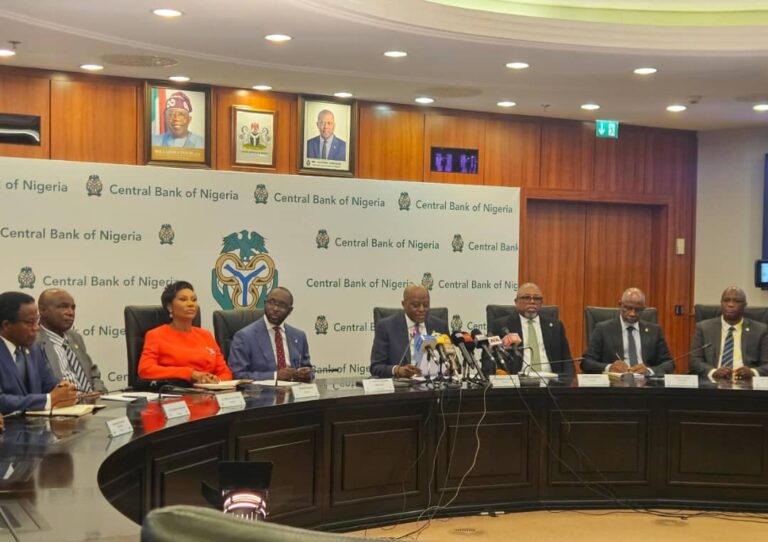
The Central Bank of Nigeria’s Monetary Policy Committee has retained the monetary policy rate at 26.5 percent, saying recent inflation increases are temporary and driven by external shocks.
CBN Governor Olayemi Cardoso announced the decision on Wednesday after the committee’s 305th meeting in Abuja. All 11 members attended and reviewed global and domestic economic developments.


The committee also kept the asymmetric corridor around the rate at +50/-450 basis points, and held the cash reserve ratio at 45 percent for deposit money banks, 16 percent for merchant banks, and 75 percent for non-TSA public sector deposits.
Cardoso said inflation rose marginally for two consecutive months, reaching 15.38 percent in March 2026, up from 15.06 percent in February, according to the National Bureau of Statistics. He attributed the trend to spillovers from the Middle East crisis, which have raised energy, transport, and logistics costs globally.
“The MPC recognises its transitory nature and remains confident that the current macroeconomic environment is sufficiently robust to support a return to disinflation,” he said.
Cardoso added that prior reforms, including exchange rate stability, stronger reserves, and a well-capitalized banking system, have helped limit the impact of global price pressures on Nigeria’s economy. He said the committee welcomed Nigeria’s recent sovereign rating upgrade and noted the completion of the banking recapitalization exercise.
The MPC said a cautious policy stance remains necessary to anchor inflation expectations and sustain macroeconomic stability.