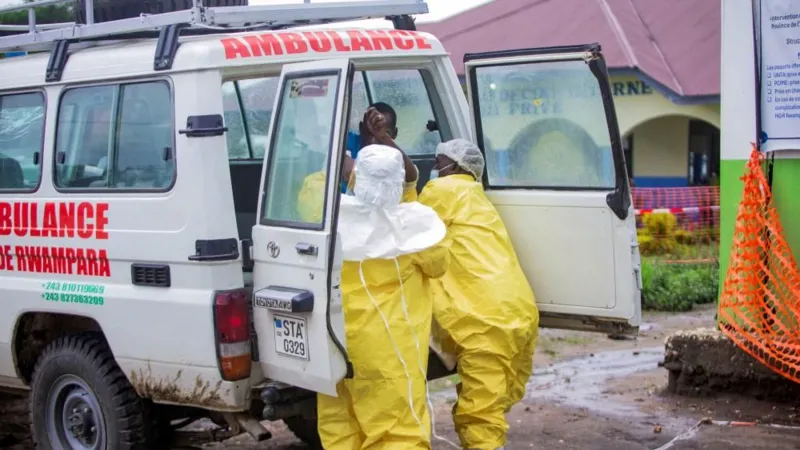
The World Health Organization has started the first clinical trial for treatments targeting the Bundibugyo strain of Ebola, which is driving the current outbreak in the Democratic Republic of Congo.
WHO Director-General Tedros Adhanom Ghebreyesus confirmed on Thursday that the first patient was enrolled in the trial. The study is testing two experimental therapeutics and is being run by the Institut National de Recherche Biomédicale in DR Congo, the Institute of Tropical Medicine in Belgium, and the University of Oxford in the UK.


There are no approved vaccines or treatments yet for Bundibugyo Ebola. Tedros said that while some patients do recover without them, safe and effective drugs would save more lives.
The outbreak began in May and was declared a public health emergency by WHO. As of June 30, WHO reported 1,406 confirmed cases and 438 deaths in DR Congo, plus 301 suspected cases. Cases have also been recorded in Uganda with 20 confirmed cases and two deaths, and one confirmed case in France.
Ebola viruses attack the immune system and organs. Human outbreaks usually start after contact with infected animals, such as fruit bats. Symptoms appear two to 21 days after exposure and begin suddenly with fever, headache, and fatigue. People become contagious only after symptoms start.
Vaccines are developed for each Ebola species, and only three of the six known species cause outbreaks.