Seven Americans who were helping fight Ebola in Congo are now in isolation at a new U.S.-built facility in Kenya, after Washington changed entry rules for travelers coming from outbreak zones.
The group works for Samaritan’s Purse, a U.S. Christian aid organization. None have symptoms, but they agreed to spend 21 days at the site “out of an abundance of caution,” according to a State Department official.


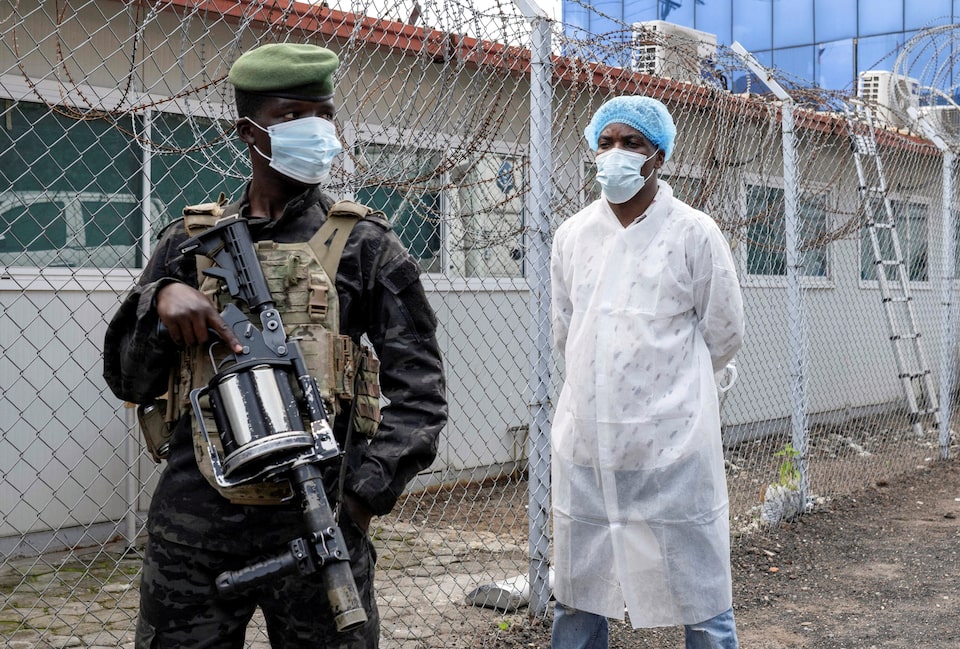
The facility is a 50-bed bio-isolation unit on an air force base in central Kenya. It was set up for asymptomatic Americans exposed to Ebola in the Democratic Republic of Congo or Uganda. Under a new U.S. policy, citizens returning from DRC must first spend three weeks in a third country before coming home.
Franklin Graham, president of Samaritan’s Purse, confirmed the seven are Disaster Assistance Response Team staff. “None of them have any symptoms, but they are being quarantined by the Kenyan government for 21 days,” he said.
U.S. Public Health Service clinicians are monitoring them. A source familiar with the matter said the team arrived Monday and is staying in tents with army cots. Some treated patients at Samaritan’s Purse centers in Congo, while others did construction with no direct contact with the sick. One person is considered a potential high-risk exposure. Kenyan authorities are not allowing the group to leave the compound.
The site has drawn strong pushback in Kenya. A court ordered construction halted pending a final ruling, but U.S. officials and satellite images show work continued. Kenya’s health ministry did not comment.
The move comes as the Ebola outbreak in Congo worsens. The rare Bundibugyo strain has killed at least 828 people since mid-May, and the World Health Organization says cases are still spreading undetected. There is no approved vaccine or treatment for this strain.
Samaritan’s Purse is one of the largest foreign responders in Congo and works closely with the WHO. Another U.S. staff member who contracted Ebola this month was flown to a hospital in Germany. Graham said he hopes future American patients could be treated at the Kenya facility instead. “It’s a state-of-the-art facility. If somebody did get sick, that’s the place you want to take them,” he said.
The virus spreads through direct contact with bodily fluids from infected people or animals.