The Gambia’s President Adama Barrow has appealed for calm following protests over prolonged power outages across the country, assuring citizens that electricity supply would improve by the end of October.
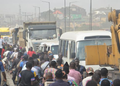
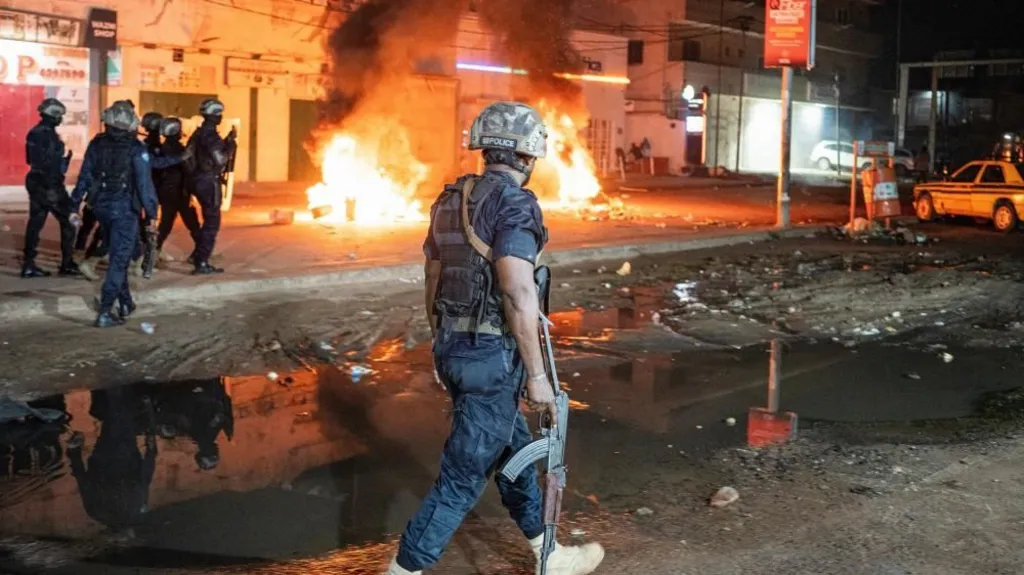
The president’s remarks came after residents in Banjul and surrounding communities took to the streets on Monday night to protest blackouts that have reportedly lasted for up to 48 hours.

Speaking in a televised address on Tuesday, Barrow acknowledged the hardship caused by the electricity crisis, saying the outages had affected homes, businesses and families.
“When you lie down in the heat and the dark, believe that you are not alone in that darkness,” Barrow said.
He described the power crisis as a national emergency and a national security issue, while admitting shortcomings in power generation, planning and maintenance.
Protesters in Banjul and nearby areas reportedly burned tyres and blocked roads during the demonstrations. Police used tear gas to disperse crowds in the Westfield area as protesters moved towards the headquarters of the National Water and Electricity Company, Nawec.
Some protesters reportedly chanted, “Barrow must go,” while others gathered near the vice-president’s residence in Farato. Banners at an office belonging to Barrow’s ruling National People’s Party were also damaged.
Barrow urged citizens not to destroy public infrastructure in response to the crisis, warning that such actions could worsen the situation and force the government to spend more money on repairs.
The Gambia has experienced persistent electricity shortages since June, with demand increasing during the hot season as temperatures rise.
The country supplements domestic electricity generation with power imported from neighbouring countries, including Senegal and Guinea. However, reduced imports from the regional electricity network have contributed to the current shortages.
Barrow said a new 24-megawatt generating unit was being installed at the Brikama power station and would be commissioned by the end of October.
He also disclosed that the government had awarded a contract for the construction of a 50MW solar power plant in Soma, although no completion date was provided.
The president, who visited facilities operated by the national energy utility on Tuesday, also promised that new generators would arrive in the country during the week.
Nawec chief Gallo Saidy appealed to citizens for patience, saying lower rainfall had reduced electricity available through the regional network.
He also noted that unusually high temperatures had increased electricity demand, while a technical problem had affected a major generating unit supplying imported power.
The protests come months before The Gambia’s presidential election, expected in December, with Barrow seeking a controversial third term.