Kenya’s Lake Naivasha, long renowned for its thriving tourism and wildlife, has become a source of devastation as rising waters continue to swallow homes and displace thousands of families in the Kihoto area of Naivasha.
Tourist boats that once carried sightseers across the scenic Rift Valley lake now ferry stranded residents after weeks of flooding pushed the shoreline up to 1.5 kilometres inland, an unprecedented expansion according to local officials.


“It hasn’t happened like this before,” said 51-year-old resident Rose Alero, who now wades through waist-deep water inside her home. Toilets across the district have overflowed, illnesses are spreading, and families have been left with nowhere to go. “People are suffering… they have nowhere to go.”
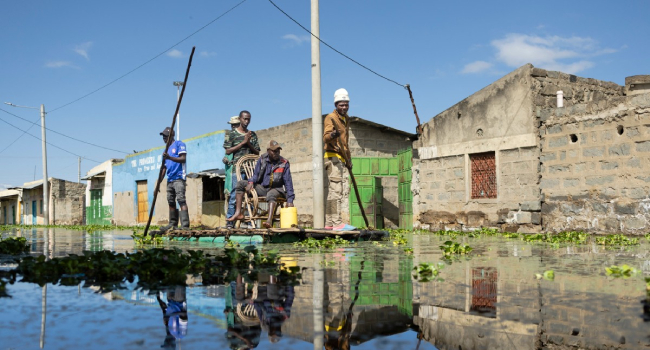
Entire neighbourhoods have been submerged. Hundreds of houses lie underwater, along with churches, police stations and access roads now buried under stagnant, debris-filled water. A sudden surge of flooding recently forced schoolchildren to evacuate on makeshift rafts.
According to Joyce Cheche, Nakuru County’s head of disaster risk management, an estimated 7,000 residents have been displaced. The floods have destroyed property, disrupted livelihoods, and threatened wildlife and tourism — key pillars of the region’s economy.
The county has been helping transport victims and implement health safeguards, but no financial compensation has been announced. Workers in the flower industry, one of Kenya’s major export sectors, are refusing to report to work over fears of cholera outbreaks, landslides, and even encounters with the many hippos that inhabit the lake.
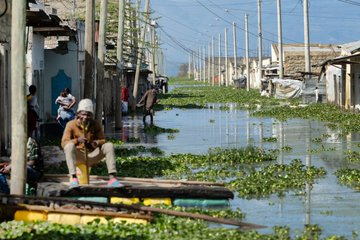
“We didn’t see it coming,” Cheche said, noting that the water continues to advance at roughly a metre per day. Once-abundant acacia trees now stand as bare, submerged trunks — a stark sign of the lake’s rapid expansion.
The flooding is part of a wider phenomenon affecting several Rift Valley lakes, displacing hundreds of thousands of people. While studies attribute the rising levels largely to climate change and increased rainfall, Kenyan geologist John Lagat of the Geothermal Development Corporation says tectonic activity plays a major role. The lakes sit atop a long geological fault, and shifting plates may have sealed underground outflows, trapping water.
Still, he acknowledges that population pressures, land degradation and higher rainfall are contributing “substantially” to the worsening situation.
Back in her inundated home, Alero is fearful of what lies ahead. With another rainy season looming, she says uncertainty hangs over every family in the community. “We are very worried. We can’t tell what will happen.