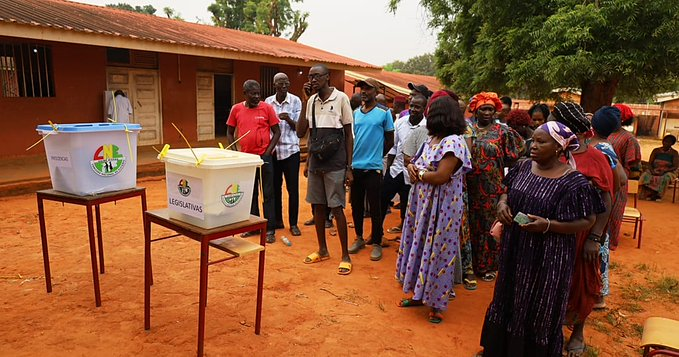
Voters in Guinea-Bissau went to the polls on Sunday to elect a new president, amid hopes for political stability despite the main opposition party being barred from participating.
Around 860,000 registered voters are choosing among 12 candidates, with economic development, better healthcare, education, and infrastructure topping citizens’ priorities.

Incumbent President Umaro Sissoco Embalo, 53, is widely favoured to win a second consecutive term, which would make him the first leader to do so since the introduction of the multiparty system in 1994. His main challenger is Fernando Dias, backed by the historically dominant PAIGC, which was excluded from the election due to late submission of its presidential and legislative applications. This marks the first time in Guinea-Bissau’s history that PAIGC, which led the country to independence in 1974, will be absent from the ballot.
Embalo and PAIGC leader Domingos Simoes Pereira are long-standing rivals, with the 2019 election resulting in a four-month post-election crisis as both men claimed victory. In 2023, Embalo dissolved the legislature, previously dominated by the opposition, and has since governed by decree. The opposition argues that PAIGC’s exclusion constitutes electoral manipulation and maintains that Embalo’s term expired on February 27, 2025.
Guinea-Bissau has faced recurrent instability since independence from Portugal in 1974, including four coups and numerous attempted coups. Nearly 40 percent of the population lives in extreme poverty, and the country has long been a transit hub for drug trafficking between Latin America and Europe.
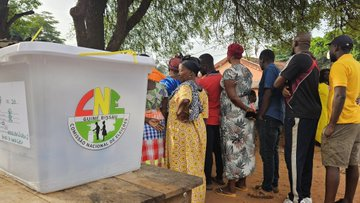
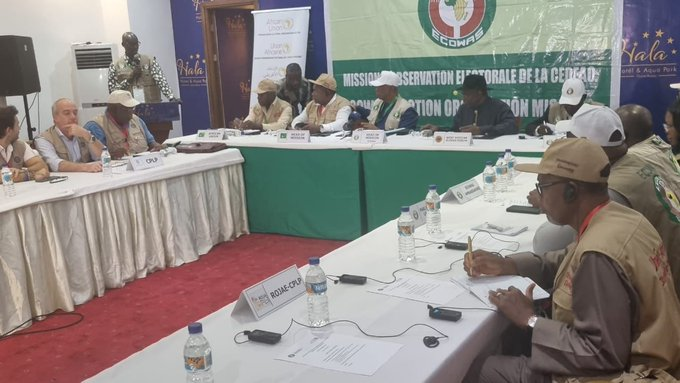
Despite these challenges, Sunday’s election proceeded without major incidents. More than 6,780 security personnel, including members of the ECOWAS Stabilisation Force, were deployed to safeguard the polls. The country’s airspace, as well as land and sea borders, were closed for the day. First results are expected by Thursday.
Experts warn that problems often emerge after elections in Guinea-Bissau, citing potential post-election disputes similar to 2019. Citizens like Alamar Bidinthile, 40, expressed hope for “change” and “stability,” while others, like construction worker Mayo Sa, 53, stressed the need for real progress after decades of political turbulence.
The vote also includes elections for all 102 members of parliament, setting the stage for the next phase of governance in the West African nation.