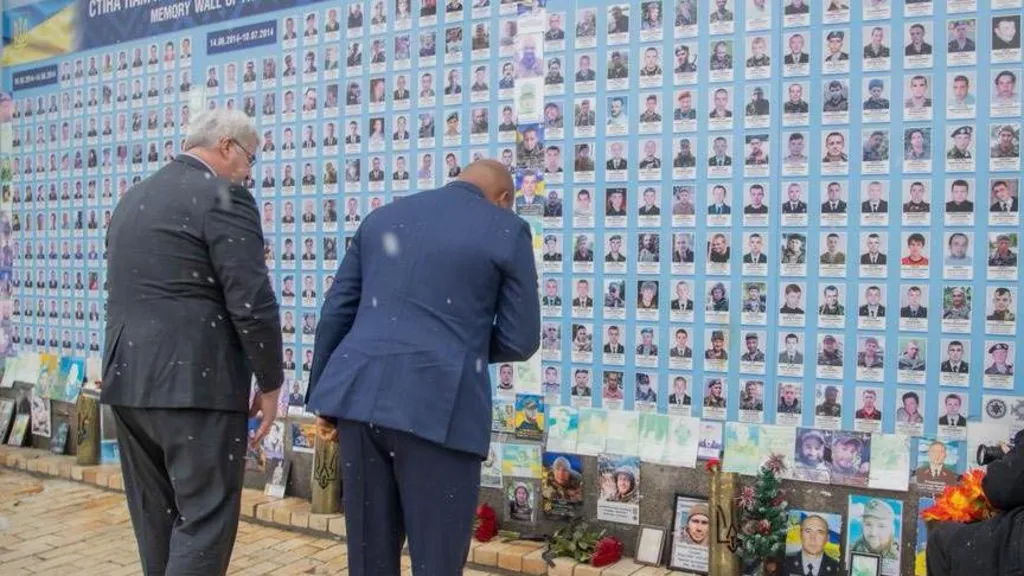
At least 55 Ghanaian nationals have been killed while fighting in the ongoing war between Russia and Ukraine, with two others currently being held as prisoners of war, Ghana’s Foreign Affairs Minister, Samuel Okudzeto Ablakwa, has disclosed.
Speaking during an official visit to Kyiv, Ablakwa revealed that approximately 272 Ghanaians have been recruited into the conflict since 2022, citing information from Ukrainian authorities. He described the situation as “depressing and frightening,” warning that Ghana could not ignore the growing toll on its citizens.

Although the minister did not specify which side the Ghanaians had been fighting for, Ukraine’s Foreign Minister, Andriy Sybiga, recently stated that more than 1,700 Africans from 36 countries had been recruited to fight for Russia.
The confirmed deaths represent the highest officially acknowledged casualties from any African country involved in the conflict. While media reports in Cameroon claim that 94 of its citizens have died, authorities there have yet to verify the figures. Casualties have also been recorded among nationals of South Africa and Kenya.
Ablakwa stressed that the casualties represent more than statistics, describing them as “human lives and the hopes of Ghanaian families.” He said the government was intensifying efforts to dismantle illegal recruitment networks, including those operating through dark web platforms, and to raise public awareness to prevent young people from being drawn into foreign conflicts.
“This is not our war, and we cannot allow our youth to become human shields for others,” he said.
During his visit, the minister also appealed to Ukrainian President Volodymyr Zelensky to facilitate the release of two Ghanaian prisoners of war captured while fighting for Russia. He described the detainees as victims of manipulation and trafficking networks, but noted that Ukrainian authorities had confirmed they were in good health and had not been subjected to torture or inhumane treatment.
The conflict has also affected other African countries. Kenya’s National Intelligence Service reported that about 1,000 Kenyans had been recruited to fight for Russia, while authorities recently charged a Kenyan national accused of luring young men abroad with false job promises.
Russia’s embassy in Kenya denied direct involvement in recruitment but acknowledged that foreign nationals legally present in the country are permitted under Russian law to voluntarily enlist in its armed forces.
The war, now in its fourth year, continues to draw foreign nationals, often through deceptive recruitment schemes promising lucrative employment. Ukrainian officials have repeatedly warned that foreign fighters on Russia’s side would be treated as enemy combatants but could surrender and receive prisoner-of-war protections under international law.
Families of affected individuals continue to seek answers, with many hoping their loved ones will eventually return home safely.