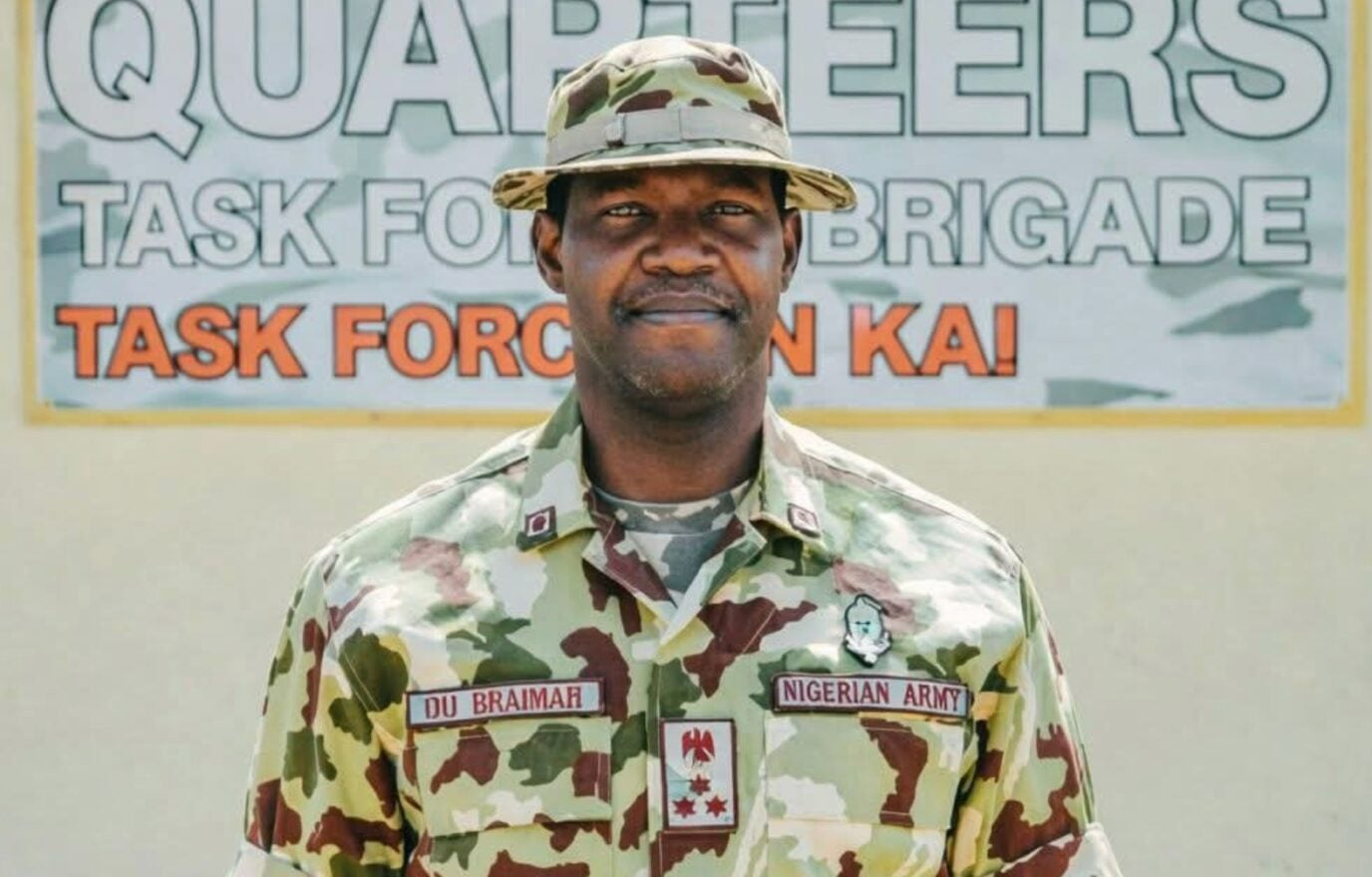
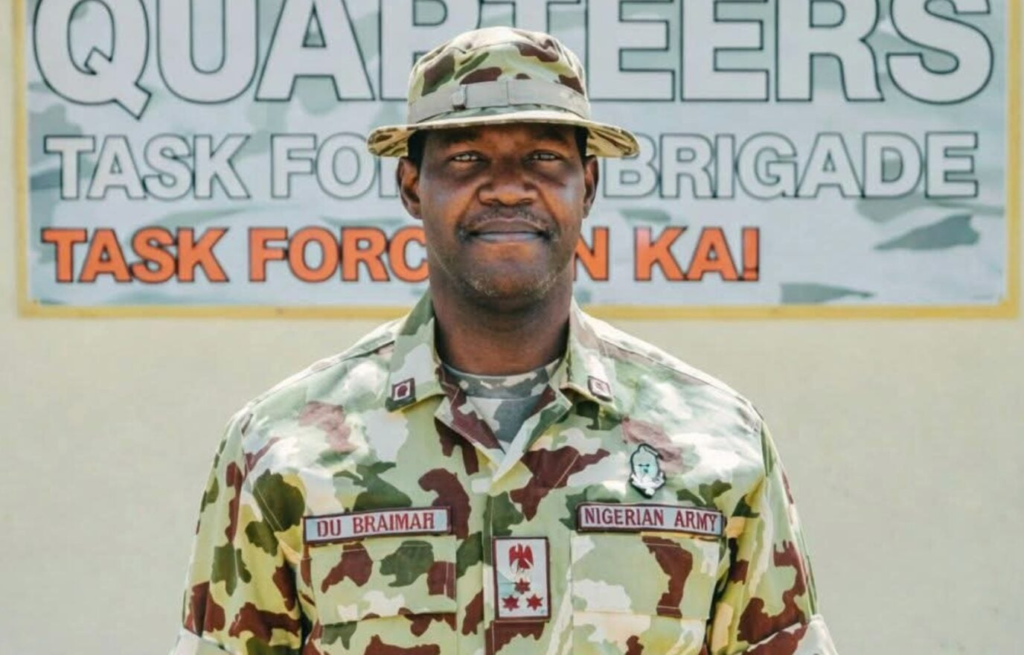
Fresh accounts have emerged detailing the circumstances surrounding the killing of the Commander of the 29 Task Force Brigade, Brigadier General Oseni Braimah, following a deadly midnight attack on a military base in Benisheikh, Borno State.
Surviving soldiers described the assault as one of the most coordinated and intense in recent months, saying insurgents overran multiple positions during the operation.


While the Nigerian Army insists the attack was successfully repelled and disputes reports of heavy casualties and equipment failure, accounts from soldiers and residents suggest a large-scale offensive that overwhelmed troops and caused significant destruction.
The attack reportedly occurred around 12:30am on Thursday when suspected Boko Haram and Islamic State West Africa Province (ISWAP) fighters launched simultaneous assaults on several military positions in Benisheikh, a strategic town in Kaga Local Government Area along the Maiduguri–Damaturu highway.
Eyewitnesses said the attackers arrived in large numbers and struck from multiple directions, targeting at least three military locations before advancing into nearby civilian areas.
A soldier who survived the attack described the operation as highly coordinated and unusual.
“We are used to coordinated attacks, but this was different. They came in large numbers from different directions at the same time. It felt like they had studied our positions for weeks,” he said.
Another soldier said the attackers’ numerical strength gave them an early advantage, forcing troops into defensive positions. “At first we held our ground, but they were too many. It was like an ambush from all sides,” he said.
He added that confusion spread among troops as reports circulated that other positions had been overrun and that senior officers had been killed.
“When we heard that some locations had fallen and that the Brigade Commander was dead, fear set in. Coordination broke down,” he added.
Sources said the battle lasted more than an hour and 30 minutes, with heavy exchanges of gunfire and explosions that forced both civilians and soldiers to flee.
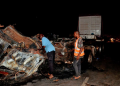
Following the attack, reports emerged suggesting that Brigadier General Braimah died due to a faulty Mine-Resistant Ambush Protected (MRAP) vehicle. However, military sources dismissed this version, insisting the situation on the ground was far more complex.
A senior source within the brigade said the vehicle was not defective but was targeted during the assault. “The insurgents set the MRAP on fire during the attack. It was not a case of mechanical failure,” the source said.
Another insider noted that only those present at the exact moment of the incident could provide a full account, adding that several eyewitnesses did not survive.
A former driver to the late general, known as Blacky, also described Braimah as strict about operational discipline and vehicle maintenance. “If you talk about maintenance, General Braimah doesn’t joke with it,” he said, adding that the commander had once facilitated his transfer out of the North-East.
Another source, however, pointed to possible systemic issues in equipment maintenance within the unit, alleging recurring concerns about operational readiness.
Residents said the attack triggered widespread panic in Benisheikh, forcing many to flee their homes in the middle of the night. “We heard loud explosions and gunshots everywhere. People were running in all directions, even soldiers were moving into town for cover,” a resident said.
Eyewitnesses also reported significant destruction, including burnt shops, vehicles, and damaged properties.
“When I returned after the attack, it was devastating. Vehicles and buildings were burnt, and civilian shops were not spared,” another resident said.
Some locals said the temporary withdrawal of troops into parts of the town created gaps that allowed insurgents to loot and set structures ablaze.
The Headquarters of Operation Hadin Kai dismissed reports claiming 17 soldiers, including the brigade commander, were killed. In a statement, Media Information Officer of the Joint Task Force, Lt.-Col. Sani Uba, said such reports were false, misleading, and intended to distort facts.
He maintained that only two officers and two soldiers died in the engagement.
He also rejected claims that the commander’s vehicle was faulty, explaining that the MRAP was only temporarily immobilised during intense combat. “The commander was actively coordinating operations when the vehicle was affected by the heat of battle,” he said.
Uba insisted that troops successfully repelled the attack and forced the insurgents to retreat in disarray.
Braimah’s death adds to a growing list of senior Nigerian military officers killed in insurgent attacks in the North-East over the years, raising renewed concerns about battlefield intelligence and troop protection.
Among them are Brigadier General Dzarma Zirkusu, Colonel Dahiru Chiroma Bako, Lieutenant Colonel Muhammad Abu Ali, and Lieutenant Colonel Ibrahim Sakaba, all of whom died in similar ambushes or base attacks between 2016 and 2021.