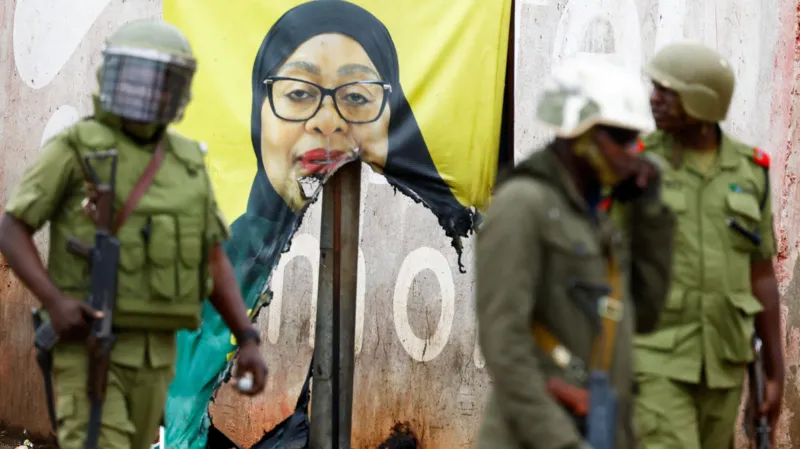
A total of 518 people died in Tanzania from “unnatural causes” in the wake of widespread protests that followed last year’s general elections, the commission of inquiry set up to investigate the violence has announced.
However, commission chairman Mohamed Chande Othman did not say who was responsible for the deaths and recommended further investigations.
Opposition parties and human rights groups have accused the security forces of unleashing a brutal crackdown on anti-government protesters.
President Samia Suluhu Hassan was declared the winner of the 29 October election with 98% of the vote — which the opposition described as a “mockery” of democracy.
The president said the election was fair and transparent. She blamed foreigners for the violence and said it was part of a plot to overthrow her.
This is the first the authorities have said how many people died. Most of those who died, 490, were male, Othman said.
The commission identified several causes of the violence, citing economic, political and social issues, including demands for political reforms, unemployment and “lack of patriotism”.
It said politicians and activists used these issues to persuade citizens to take part in protests. It added that the protests were neither peaceful nor lawful and would not qualify for legal protection.
Othman said the violence was the result of multiple factors, some of which have existed for many years.
“We are dealing with both long-standing issues that have persisted over time and immediate triggers that ignited tensions on the ground,” he said as he presented the report.
Opposition parties have raised concerns about the nine‑member commission, appointed by President Samia, accusing it of lacking independence and impartiality to investigate the violence.
The commission began its work on 20 November with a mandate to determine the root causes of the violence, who was involved and for what purpose.
It was also tasked with examining the consequences of the unrest, the response to it and make recommendations on the way forward.
It collected evidence from across the country from ordinary citizens, victims, political leaders and security agencies. Some of its sessions were held in private.