The Nigerian National Petroleum Company Limited (NNPC Ltd) has signed a Memorandum of Understanding with two Chinese firms to fast-track the rehabilitation and commercial restart of Nigeria’s refineries, with plans for technical equity partnerships.
The deal was signed with Sanjiang Chemical Company Limited and Xingcheng (Fuzhou) Industrial Park Operation and Management Co. Ltd in Jiaxing City, China, on April 30, 2026. NNPC described it as a “critical milestone” in its refinery transformation drive.

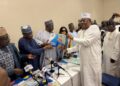
NNPC Group Chief Executive Officer Bashir Bayo Ojulari signed the MoU alongside Sanjiang Chemical Chairman Guan Jianzhong and Xingcheng Industrial Park Chairman Bill Bi.
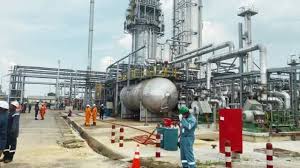
According to NNPC spokesperson Andy Odeh, the MoU sets the stage for a potential Technical Equity Partnership to complete outstanding work at the Port Harcourt and Warri refineries and ensure their long-term operational efficiency.
“The NNPC Ltd has signed a Memorandum of Understanding (MoU) with two Chinese companies, Sanjiang Chemical Company Limited and Xingcheng (Fuzhou) Industrial Park Operation and Management Co. Ltd, for collaboration through a potential Technical Equity Partnership in support of the completion and operation of the Port Harcourt and Warri Refineries,” the statement said.
The collaboration will cover full-scale operation and maintenance of the facilities to achieve “best-in-class, sustainable performance.” It will also explore expansion projects to reposition the refineries to produce cleaner fuels and higher-value petroleum products.
Ojulari said the agreement followed more than six months of intensive technical and commercial talks between NNPC and the Chinese firms.
“All parties recognise mutually beneficial opportunities for the development and long-term sustainable profitability of NNPC’s refining assets in Nigeria, and the collective weight required for success,” he said.
He noted the MoU marks a shift from traditional contractor-led rehabilitation to a performance-driven partnership model based on shared risks and returns.
“This is an important step on the journey towards identifying potential technical equity partner or partners to restart and expand NNPC’s refineries, and to explore opportunities in co-located petrochemicals and gas-based industries,” Ojulari added.
The technical equity model is a departure from past turnaround maintenance programmes that failed to deliver lasting results despite heavy spending. Under the proposed framework, the Chinese partners are expected to provide engineering expertise, operational discipline, and investment, with returns tied to refinery performance.
The scope includes developing co-located gas-based industrial hubs to turn the Port Harcourt and Warri complexes into integrated energy and petrochemical centres. Such hubs could unlock additional value from Nigeria’s gas reserves while supporting domestic manufacturing and exports.
NNPC said that while the MoU reflects intent to advance discussions in good faith, any binding agreements remain subject to regulatory approvals and detailed commercial negotiations.
The deal aligns with Ojulari’s position at the Nigeria International Energy Summit 2026, where he called for global technical partners to take equity positions in Nigeria’s refining assets.
“What we are doing differently is moving away from just funding projects to bringing in partners who have skin in the game, partners who will operate, optimise, and guarantee performance,” he said at the summit.
“The days of spending billions on rehabilitation without sustainable output are behind us. We are now focused on partnerships that deliver value, technology transfer, and operational excellence.”
Ojulari added that modern refineries must evolve into integrated industrial platforms: “That is where the future lies, petrochemicals, fertilizers, gas monetisation. That is how you create real economic value.”
Nigeria’s state-owned refineries in Port Harcourt, Warri, and Kaduna have suffered decades of underperformance and frequent shutdowns, forcing heavy reliance on imported petroleum products. Despite multiple turnaround projects, the facilities have consistently operated far below capacity.
The current administration has prioritised refinery revival as part of its energy security strategy, while also supporting private sector investments such as the Dangote Refinery.
With this China deal, NNPC is betting on a new partnership model that ties investment returns directly to performance in a bid to unlock the long-elusive potential of Nigeria’s refining sector.