The Muslim Public Affairs Centre, MPAC, has issued a non-partisan demand to all governorship candidates in Nigeria’s six South-West states, warning that Muslim voters will withhold support from any party that fails to commit to measurable equity in appointments, religious rights, and land access.
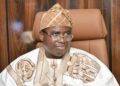
In a statement released Thursday in Lagos, MPAC Executive Chairman Disu Kamor said the group is not endorsing or opposing any party. Instead, it is asking candidates in Lagos, Ogun, Oyo, Osun, Ondo and Ekiti to sign binding pledges ahead of upcoming governorship contests.


Cites “Regional Pattern” of Marginalisation
MPAC grounded its demand in constitutional provisions and what it called verified data from its own field research and public records. Citing Section 38 and 42 of the 1999 Constitution, the Centre argued that freedom of religion and non-discrimination are enforceable rights, not privileges.
The group pointed to post-2023 cabinet appointments as evidence of a systemic imbalance. According to MPAC’s compilation:
- Lagos: 49 Christian commissioners to 14 Muslims
- Ogun: 16 to 4
- Oyo: 10 to 6
- Osun: 17 to 7
- Ekiti: 24 to 1
- Ondo: 15 to 2 under late Gov. Rotimi Akeredolu, and 0 Muslims in Gov. Lucky Ayedatiwa’s initial 6-member cabinet
MPAC said the pattern extends to boards, parastatals, judicial appointments, and traditional honours, where Muslim leaders “routinely receive markedly less recognition” than their Christian counterparts.
Shariah Panels, Mosques, and Hijab Listed as Flashpoints
The statement also flagged three recurring issues.
On Shariah civil arbitration, MPAC noted panels have operated voluntarily in Ibadan since 2002, Lagos since 2003, Abeokuta since 2018, and Osogbo since 2005. But it said Oyo Gov. Seyi Makinde suspended the inauguration of a panel in January 2025, while Ekiti authorities ordered the dissolution of a new panel in Ado-Ekiti. MPAC contrasted this with what it called state acceptance of church-based mediation for similar civil disputes.
On mosques, the Centre alleged that Community Development Associations in Christian-majority LGAs in Lagos, Ogun and Oyo often block mosque projects over “noise” or “traffic,” while approving churches in the same areas. It also said estate and GRA layouts commonly allocate space for multiple churches but none, or one, mosque.
On the hijab, MPAC referenced the Supreme Court’s June 17, 2022 judgment affirming Muslim students’ right to wear it with school uniforms. It said Lagos took six months to issue a compliance circular, and cited ongoing litigation at International School Ibadan and unresolved issues at LAUTECH Staff School and College in Ogbomoso. Its research, it added, found that 87.6% of hijab-wearing Muslim women reported discrimination in 2020, with about 80% still reporting it in 2026.
MPAC also criticized what it called “ceremony without substance” — festive greetings and Hajj slots to officials — saying such gestures do not offset exclusion from cabinets and land decisions.
Six Specific Pledges Demanded
MPAC asked every candidate to make six public, written commitments:
- Proportional and transparent representation in cabinets, boards, and parastatals, backed by an audit of the last 10 years.
- Formal recognition of voluntary Shariah civil arbitration panels under the Arbitration and Conciliation Act, without obstruction.
- A codified, enforceable hijab policy across public schools with sanctions for violators.
- Equitable land allocation for worship in new layouts, plus a religious land review panel with Muslim members.
- Equal application of zoning rules for mosques and churches, with a transparent appeals process.
- Equal protocol and access for Muslim leaders year-round, not just during festivals.
“Muslim Voters Will Remember”
The Centre issued a direct warning: “Muslim voters across the South-West will remember” which administrations treated them as full stakeholders and which offered only symbolic gestures. It said no endorsement by any Muslim leader can substitute for a documented record of equity.
MPAC said it will launch voter education, media campaigns, and direct engagements with parties to secure pledges before the elections. It also called on other Islamic bodies and community leaders in the region to join the campaign.
“The time for passive expectation has passed,” Kamor wrote. “The South-West Muslim community deserves equity, visibility, and fair representation — and we will advocate for it until it is achieved.”
The full statement was signed by Disu Kamor and released via MPAC Nigeria.