The United States has imposed a fresh round of sanctions on Sudan, accusing the country’s military-led government of using chemical weapons during its ongoing conflict with the paramilitary Rapid Support Forces (RSF).
The sanctions, which took effect on Monday, were announced by the US State Department, which said Sudan violated the Chemical Weapons Convention by allegedly deploying chemical weapons in 2024.

Although Washington did not disclose specific details of the alleged attacks, international media reports have linked the Sudanese military to the use of chlorine gas during the conflict.
The Sudanese government has rejected the allegations, describing them as baseless and politically motivated.
Under the new measures, Sudan will face tighter restrictions on access to US financing and exports, while Sudan-owned airlines will also be barred from operating in US airspace.
The latest sanctions follow an earlier determination by the US that Sudan’s government breached its obligations under the Chemical Weapons Convention, which the country ratified in 1999.
Media reports published last year alleged that the Sudanese military used chlorine gas in at least two attacks during the war. One investigation reported that chlorine-filled barrels were dropped from military aircraft near the al-Jaili oil refinery, then under the control of the RSF.
The Sudanese army has previously faced similar accusations. In 2016, Amnesty International alleged that government forces used chemical weapons against civilians in Darfur, claims that Khartoum also denied.
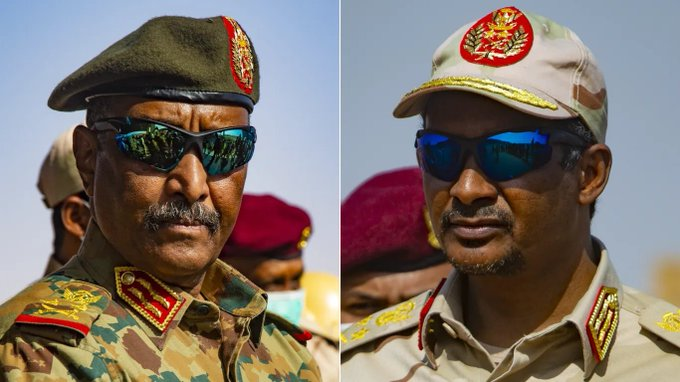
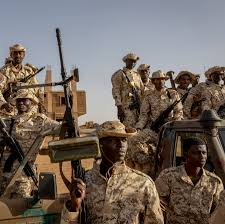
The conflict between the Sudanese Armed Forces, led by General Abdel Fattah al-Burhan, and the RSF, commanded by Mohamed Hamdan Daglo, popularly known as Hemeti, erupted in April 2023 after a power struggle between the former allies.
Since then, both sides have faced allegations of serious human rights violations, with the United States previously sanctioning RSF leaders over accusations of genocide in Darfur.
Relations between Sudan and the United States have fluctuated over the years. After decades of sanctions under former President Omar al-Bashir, Washington eased restrictions following his removal from power in 2019. However, sanctions were reimposed after the 2021 military coup and expanded as the current conflict escalated.
The war has triggered what the United Nations describes as the world’s largest humanitarian crisis, with millions of people facing severe food shortages and widespread displacement. Aid agencies estimate that more than 200,000 people have been killed since fighting began.
Despite repeated diplomatic efforts by the United States and its international partners to broker a ceasefire, the warring sides have yet to reach an agreement, with both continuing to pursue military victories.