A hillside collapse killed 14 worshippers at a mountain monastery in northern Ethiopia early Monday, cutting short an overnight prayer service that drew people seeking healing.
The landslide struck the Tsadqane Debre Mitmaq St Mary Monastery in Amhara region’s North Shewa Zone around the early hours. Worshippers had gathered inside a prayer chamber carved into the rock for a holy water cleansing ritual, a practice common among Ethiopian Orthodox Christians seeking relief from chronic illnesses.


“The land above the cave slid after the heavy rain that lasted throughout the night,” said local official Dagnachew Azbite. Seven people were pulled out injured, five of them seriously.
Rescue teams, security forces, health workers and local residents searched the debris through Monday, but authorities have now stopped the operation. Eleven of the victims have been buried at the monastery. The remaining three bodies were taken back to their hometowns. Officials said identifying some of the dead is still difficult.
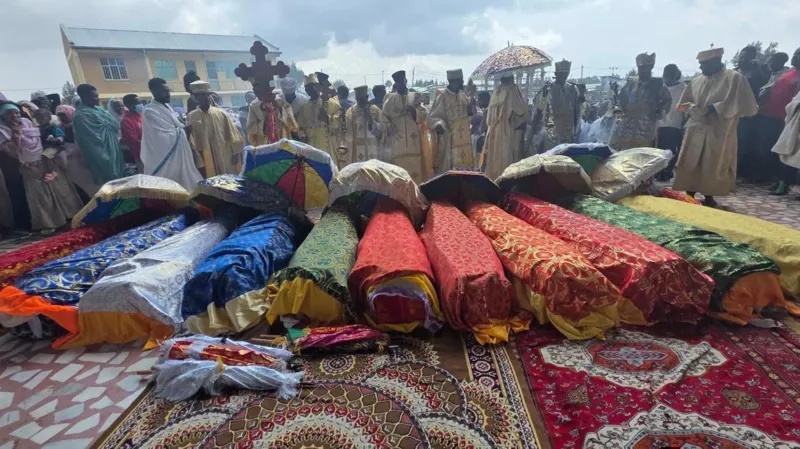
Archbishop Abune Klementos of the North Shewa Diocese visited the site to lead funeral prayers, visit the injured in hospital, and comfort families. Grieving relatives gathered as clergy in robes held crosses and ceremonial umbrellas beside rows of draped coffins.
Landslides are common in Ethiopia during the main rainy season from June to August. In March, floods and landslides in the southern Gamo Zone killed more than 100 people. In July 2024, a slide in the neighboring Geze Gofa Zone killed more than 229, including rescuers, in one of the country’s deadliest weather disasters in recent years.
Researchers note that East Africa has seen more intense wet periods and longer dry spells over the past two decades. Scientists warn that climate change is making heavy, prolonged downpours more frequent and severe, increasing the risk of disasters like this one.