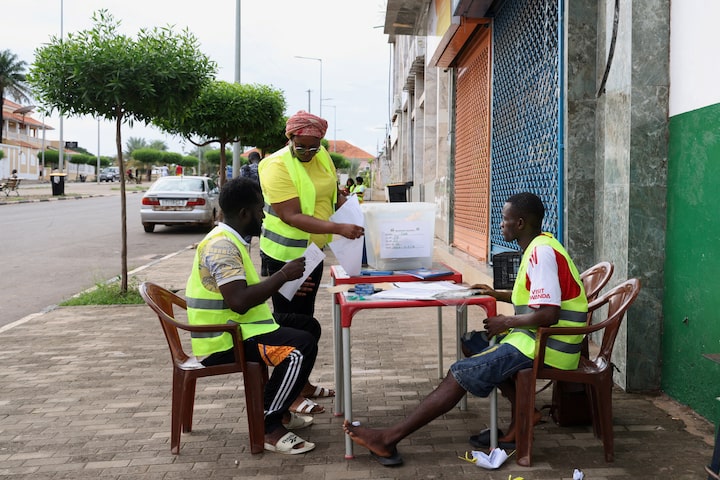
Voters in Guinea-Bissau have approved a new constitution that significantly expands the president’s powers, according to provisional results released Tuesday.
With about 60% of registered voters turning out, the referendum passed with 70% support and 30% opposition, the National Electoral Commission said. Roughly 544,060 people voted.

The vote took place Sunday under a military government that took power in a coup last November. The new charter will let the president directly appoint and dismiss the prime minister and cabinet, create or abolish ministries, and dissolve parliament during a grave political crisis.
Right now, parliament names the prime minister, who then forms the cabinet.
Other key changes:
- Smaller parliament: The legislature will shrink to 65 seats from 102.
- Fewer constituencies: Electoral districts drop to 12 from 29.
- Residency rule: Presidential candidates must have lived in Guinea-Bissau continuously for the five years before running.
The result gives the military-backed government a mandate to reshape the political system ahead of a presidential election set for December. But turnout appeared low in parts of the capital, Bissau. A Reuters witness described polling stations as largely empty, and some residents told local media they didn’t know the referendum was happening or what it was about.
The main opposition PAIGC party boycotted the vote, arguing there weren’t enough political and institutional safeguards. In a video message, PAIGC leader Domingos Simoes Pereira accused referendum supporters of trying to “kill our freedom and bury our democracy.”
A spokesperson for the military government was not available for comment.
The vote is the latest chapter in Guinea-Bissau’s long cycle of instability. The November coup was the ninth in West and Central Africa in five years. The country, known for its role as a cocaine trafficking hub, has a history of frequent military interventions.