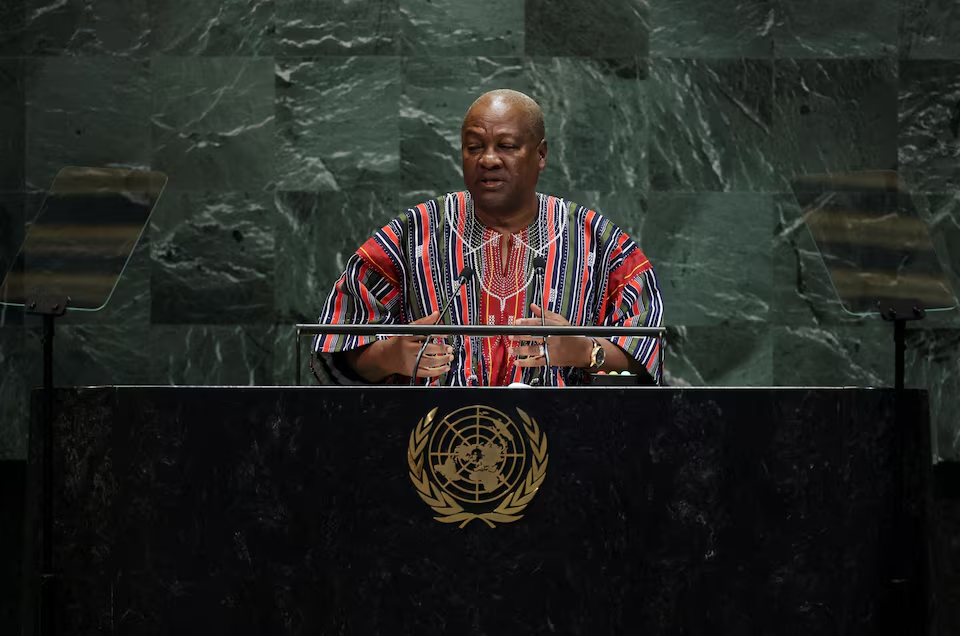
Ghana’s President John Dramani Mahama has been urged by an international delegation advocating reparations for transatlantic slavery and colonialism to rally African leaders behind the growing movement, calling on them to show unity and political courage in confronting the legacy of historical injustices.
The delegation, comprising experts from Africa, the Caribbean, Europe, Latin America and the United States, met Mahama to present priority actions aligned with the African Union’s reparations agenda.

In a statement released on Friday, the group said the Ghanaian leader was encouraged to galvanise support across the continent and persuade fellow heads of state to stand with civil society and affected communities at home and in the diaspora.
The appeal comes months after the African Union launched an initiative in February aimed at forging a unified continental vision on reparations. The effort seeks to define what reparations could entail, ranging from financial compensation and formal acknowledgements of wrongdoing to institutional reforms designed to address enduring inequalities.
Between the 15th and 19th centuries, at least 12.5 million Africans were kidnapped and forcibly transported across the Atlantic on European ships, where they were sold into slavery. Campaigners argue that the consequences of that system remain visible today in the form of racial discrimination, economic disparities and social exclusion, and say meaningful redress is long overdue.
While calls for reparations have gathered momentum in recent years, they have also provoked resistance, particularly in Europe.
Several European leaders have opposed even opening discussions on the issue, with critics insisting that present-day states and institutions should not be held accountable for crimes committed centuries ago.
Ghana has emerged as one of Africa’s most vocal advocates for reparations, but the delegation stressed that sustained progress would depend on strategic coherence and unity among political leaders across the continent. They urged Mahama to encourage his peers to “choose courage over comfort” by openly supporting reparations demands rather than yielding to diplomatic or political pressure.