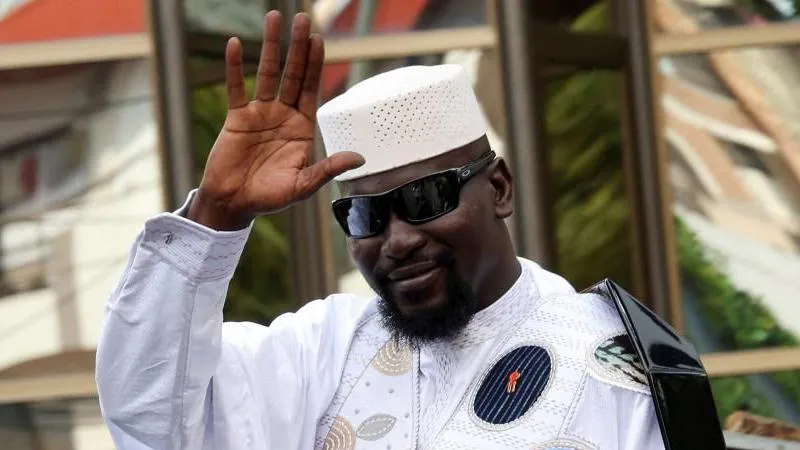
Guinea’s authorities have restricted access to major social media platforms as early election results showed junta leader Gen. Mamady Doumbouya heading toward a decisive victory in the country’s presidential poll, drawing sharp criticism from opposition figures and civil society groups.
Internet monitoring group NetBlocks said access to TikTok, YouTube and Facebook was disrupted through key mobile providers Orange and MTN as Guineans awaited the final results of Sunday’s vote. The government has not officially commented on the restrictions, but critics say the move appears aimed at limiting online criticism and debate over the conduct and outcome of the election.
Partial results released late Monday indicate that Doumbouya, who seized power in a 2021 coup, secured more than 80% of the vote in several districts of the capital, Conakry.
Figures read on state television by Djenabou Touré, head of the General Directorate of Elections, also showed him leading by wide margins in areas including Boffa and Fria in western Guinea, Gaoual in the northwest, Koundara and Labé in the north, and Nzérékoré in the southeast, according to AFP.
The vote went ahead without Guinea’s main opposition parties, RPG Arc-en-Ciel and the Union of Democratic Forces of Guinea (UFDG), whose leaders were barred from contesting. Eight other candidates were on the ballot, but analysts say none had a significant political base. A coalition of civil society groups campaigning for a return to civilian rule dismissed the election as a “charade,” while opposition figures alleged widespread irregularities.
Doumbouya, 41, had previously vowed not to seek elected office after overthrowing former president Alpha Condé, who was then 83. At the time, he promised a swift transition to civilian rule, insisting that neither he nor any member of the military-led transition would run for office. That pledge was later abandoned after a new constitution adopted in September cleared the way for his candidacy.
While the general retains support among sections of Guinea’s youth, his rule has been marked by restrictions on opposition activity, bans on protests and mounting pressure on independent media in the run-up to the election.
He justified Condé’s removal by citing corruption, human rights abuses and economic mismanagement.
Guinea is richly endowed with natural resources, holding the world’s largest bauxite reserves and vast iron ore deposits. The government last month launched the long-awaited Simandou iron ore project to widespread anticipation. Yet despite that wealth, more than half of Guineans live in poverty, according to the World Bank, underscoring the stakes surrounding the country’s uncertain political transition.