Iran launched a fresh wave of missile and drone strikes on Sunday targeting United States military bases across the Middle East and key Israeli military facilities, in retaliation for the killing of Supreme Leader Ayatollah Ali Khamenei, Iranian state media reported.
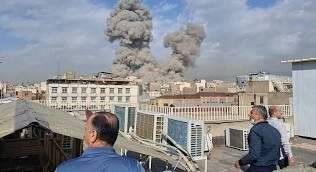
According to Iranian state television, at least 27 US military installations in the Gulf region and the Kurdistan area of Iraq were struck, alongside Israel’s military headquarters and a defence industrial complex in Tel Aviv. Iran’s army said the coordinated attacks were carried out in multiple phases by its air force.
The strikes followed confirmation by Iranian state television earlier Sunday that Khamenei, who had ruled Iran since 1989, was killed during a large-scale military operation launched by the United States and Israel. The killing of the 86-year-old cleric triggered immediate retaliation from Tehran, with the Revolutionary Guards vowing what they described as the “most ferocious” response against US and Israeli targets.
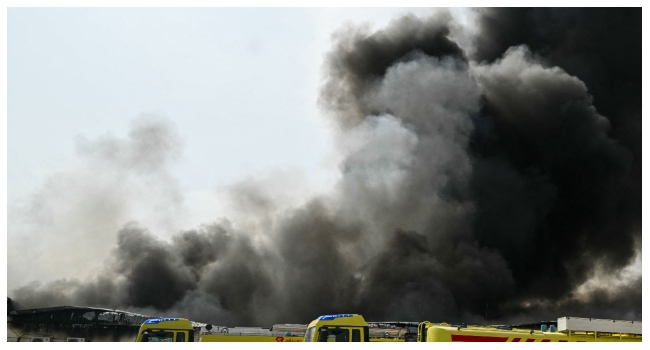
Explosions and warning sirens were reported in several cities across the region, including Doha, Dubai and Manama, while Israel’s military confirmed it was responding to incoming Iranian missiles. Iranian strikes reportedly caused casualties in parts of the region, including deaths in Abu Dhabi and Tel Aviv during earlier retaliatory attacks.
In Iran, thousands of mourners gathered in Tehran, chanting anti-US slogans and mourning the longtime leader. Authorities also confirmed the deaths of senior officials, including top military commanders and close advisers to Khamenei, following the initial US-Israeli assault.
US President Donald Trump warned Iran against further retaliation, threatening overwhelming military force. Israeli Prime Minister Benjamin Netanyahu also called on Iranians to challenge their government, describing the situation as a turning point.
Iran’s leadership, however, vowed continued resistance. Senior officials warned that Washington and Tel Aviv had crossed “red lines” and promised consequences, while parliament and military leaders said the country had prepared for all possible scenarios.
Amid the escalating conflict, regional tensions intensified significantly, with several Middle Eastern countries closing their airspace and airlines suspending flights. Iran also threatened to close the Strait of Hormuz, a vital global oil shipping route, raising fears of broader economic disruption.
Iranian state media said President Masoud Pezeshkian and other senior officials would oversee the country during a transitional period following Khamenei’s death, while questions remain over long-term succession and stability in the Islamic Republic.
The escalating exchange of strikes has heightened fears of a wider regional war, with international calls growing for restraint and urgent diplomatic intervention.