Christians around the world marked Palm Sunday with colourful processions, solemn church services, and renewed calls for peace, as this year’s observance took place amid rising global tensions.
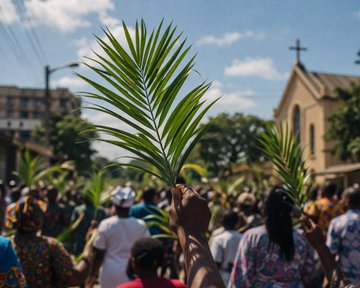
Palm Sunday, which signals the beginning of Holy Week, commemorates the triumphant entry of Jesus Christ into Jerusalem, where he was greeted by crowds waving palm branches — a lasting symbol of victory and peace.
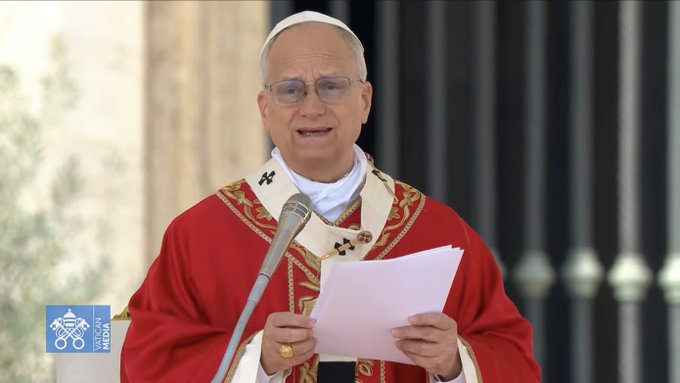
At the Vatican, Pope Leo XIV used his Palm Sunday Mass at St. Peter’s Square to deliver a strong message against war and violence. Addressing tens of thousands of worshippers, he stressed that religion must never be used to justify conflict, describing God as a “king of peace.”

The pontiff urged believers to reflect that message in a world increasingly defined by division, warning that prayers offered by leaders engaged in violence contradict Christian teachings. He also expressed concern for Christians in conflict zones, particularly in the Middle East, where instability may hinder Holy Week observances.
Across Nigeria, large congregations gathered in cities such as Lagos, Abuja, and Port Harcourt, reflecting the country’s vibrant Christian population.
Worshippers participated in open-air services, waving palm fronds and singing hymns to commemorate the biblical event. Many churches organised processions within their premises and along nearby streets, while clergy blessed palm branches, which congregants later took home as symbols of faith.
Despite prevailing economic challenges, attendance remained high, with many churches holding multiple services to accommodate large crowds. For many faithful, the day blended celebration with reflection, setting a solemn tone for the days leading to Easter.
The Christian Association of Nigeria (CAN) called on national leaders to show empathy and ease the burden on citizens. In a statement signed by its president, Archbishop Daniel Okoh, the body emphasised that Jesus’ entry into Jerusalem symbolised humility, peace, and purpose rather than power.
CAN noted that rising living costs continue to strain many households, linking local economic pressures to global developments, including tensions involving Iran, Israel, and the United States, which are affecting global energy markets and contributing to increased fuel prices.