Nigeria’s headline inflation rate climbed to 15.69% in April 2026, according to the National Bureau of Statistics.
The NBS released the new Consumer Price Index figures on Friday, following the completion of a rebasing exercise that adopted 2024 as the base year and 2023 as the weight reference period.

The CPI rose to 138.3 in April, a 2.9-point increase from March. Year-on-year inflation was up from 15.38% in March 2026, but well below the 26.82% recorded in April 2025. Month-on-month inflation slowed to 2.13% from 4.18% in March.
Statistician-General Adeyemi Adeniran said food and non-alcoholic beverages contributed most to inflation at 6.40%, followed by restaurants and accommodation services at 3.56%, and transport at 1.70%.
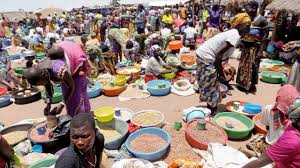
Food inflation stood at 16.06% year-on-year, down sharply from 24.68% in April 2025. Month-on-month food inflation also eased to 3.63% from 4.17% in March. The NBS attributed the changes to price movements in millet, yam flour, beef, garri, pepper, beans, tomatoes, and other staples.
Core inflation, which excludes food and energy, was 15.86% year-on-year and 1.03% month-on-month, down from 4.03% in March.
Urban inflation was 15.40% year-on-year, while rural inflation was higher at 16.36%. Sokoto recorded the highest state inflation at 25.74%, and Edo the lowest at 5.91%. For food inflation, Enugu led at 32.67%, with Borno the lowest at the sub-national level.