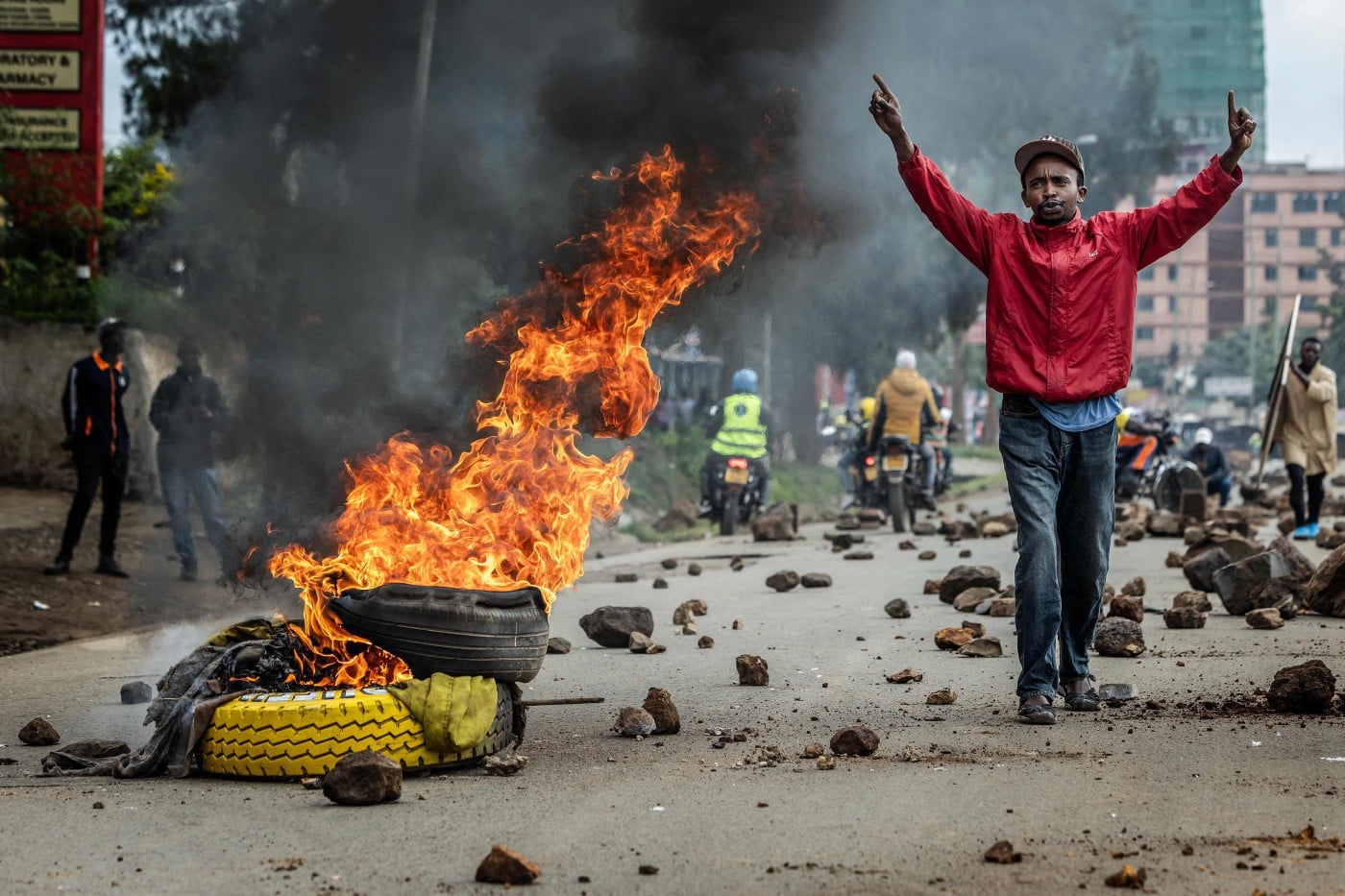
Protests broke out across several Kenyan towns on Monday after steep fuel price increases, with a nationwide public transport strike leaving commuters stranded and roads blocked in Nairobi and other cities.
The Transport Sector Alliance said vehicles linked to its member groups would halt operations from midnight to protest the latest hike. Police said they would act to prevent disruptions.


Kenya’s Energy and Petroleum Regulatory Authority raised retail fuel prices by up to 23.5% last week, following a 24.2% increase in April. The rises have been driven by tighter global oil and gas supplies linked to the conflict in the Middle East.
In Nairobi, roads leading into the capital were blocked by striking operators and groups of protesters. Police fired tear gas in some areas, while protesters burned tyres to obstruct key routes, worsening congestion.
In Mombasa, the strike raised concerns over potential delays to supply chains at Kenya’s main port.
Finance Minister John Mbadi said the finance and energy ministries planned to meet transport operators later on Monday to discuss a solution. He noted that current fuel prices remain subsidised.
Kenya imports nearly all its fuel from the Middle East through government-to-government deals. The latest increase has pushed up transport fares and the cost of basic goods, adding to pressure on households already facing a high cost of living.
Commuters reported sharp rises in daily expenses. Public relations worker Gabriel Odhiambo said his transport costs had doubled, while food prices had also climbed, with four tomatoes now costing 60 shillings, up from 20 shillings.
Under the May 15–June 14 pricing cycle, super petrol in Nairobi rose to 214.25 shillings per litre from 206.97, and diesel to 242.92 shillings from 196.63. Kerosene remained unchanged at 152.78 shillings.