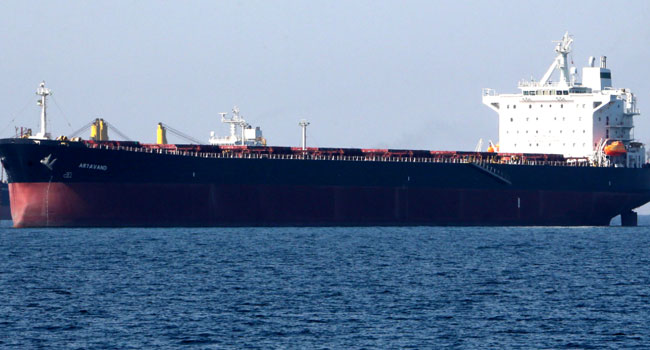
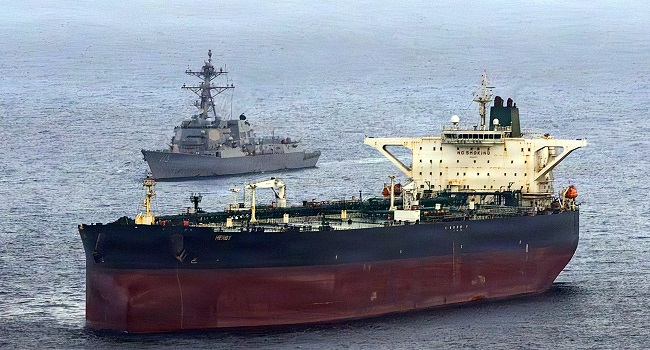
The United States and Iran have announced a breakthrough agreement aimed at ending months of conflict across the Middle East and reopening the strategic Strait of Hormuz, a key global oil shipping route that has remained blockaded since the war began.
The deal, which was jointly announced by Washington and mediator Pakistan on Monday, is expected to be formally signed in Switzerland on Friday.

US President Donald Trump confirmed that the agreement would lead to the immediate reopening of the Strait of Hormuz, through which a significant portion of the world’s oil supplies passes.
“The deal with the Islamic Republic of Iran is now complete. Ships of the world, start your engines. Let the oil flow,” Trump said in a statement on Sunday.
Iran’s Deputy Foreign Minister, Kazem Gharibabadi, described the agreement as a decisive step towards ending hostilities.
“This agreement puts an immediate end to the war, and talks will continue within two months to seek a final settlement,” he said during a televised address.
The conflict, which began on February 28 following a wave of airstrikes involving the United States, Israel and Iran, has triggered widespread instability across the region, disrupted global energy markets and raised fears of a broader regional war.
While details of the agreement remain unclear, Iranian state media reported that the United States would release billions of dollars in frozen Iranian assets as part of the arrangement.
According to Iran’s Mehr News Agency, the proposed memorandum of understanding includes the release of $12 billion in frozen funds before negotiations commence, with an additional $24 billion expected to be unlocked during a 60-day negotiation period following the signing.
The Trump administration has not confirmed those details.
A diplomatic source told AFP that indirect talks between US and Iranian officials are expected to take place in Doha ahead of the formal signing ceremony in Geneva.
Despite the announcement, questions remain over the future of Iran’s nuclear programme and the status of its stockpile of highly enriched uranium.
Trump told the New York Times that discussions were ongoing regarding a potential suspension of Iran’s uranium enrichment activities, suggesting the United States could support a 15-year freeze.
Regional and international leaders welcomed the agreement, with United Nations Secretary-General Antonio Guterres describing it as a “critical step” towards restoring peace.
Saudi Arabia, Egypt and Pakistan all expressed support for the deal, while the United Kingdom, France, Germany and Italy signalled their readiness to ease sanctions on Iran as part of broader diplomatic efforts.
However, Israel indicated that its military presence in Lebanon, Syria and Gaza would continue despite the ceasefire framework.
Defence Minister Israel Katz said Israeli forces would remain in designated security zones indefinitely to protect the country’s borders and communities.
The announcement had an immediate impact on global markets, with oil prices falling nearly five per cent amid expectations that the reopening of the Strait of Hormuz would ease concerns over supply disruptions.
US Vice President JD Vance said the agreement could help lower energy costs worldwide and promote long-term economic stability in the Middle East.
He added that he plans to attend the signing ceremony in Geneva and noted that President Trump could also be present.