A cholera outbreak in Sudan has claimed 120 lives and infected at least 1,102 suspected cases since May, according to the World Health Organization (WHO), as the country’s prolonged conflict continues to cripple healthcare services.
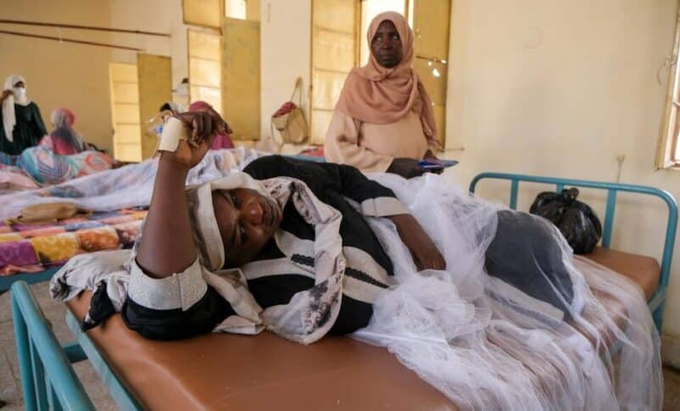
The WHO said the latest outbreak is spreading across isolated areas affected by the more than three-year conflict between the Sudanese Armed Forces and the paramilitary Rapid Support Forces (RSF).

Speaking on Wednesday, WHO’s representative in Sudan, Dr. Shible Sahbani, said the country is experiencing its third cholera outbreak in three years. He noted that while cholera previously occurred in cycles every three years, the ongoing conflict, limited access to affected communities and shortages of medical supplies have led to almost continuous outbreaks.
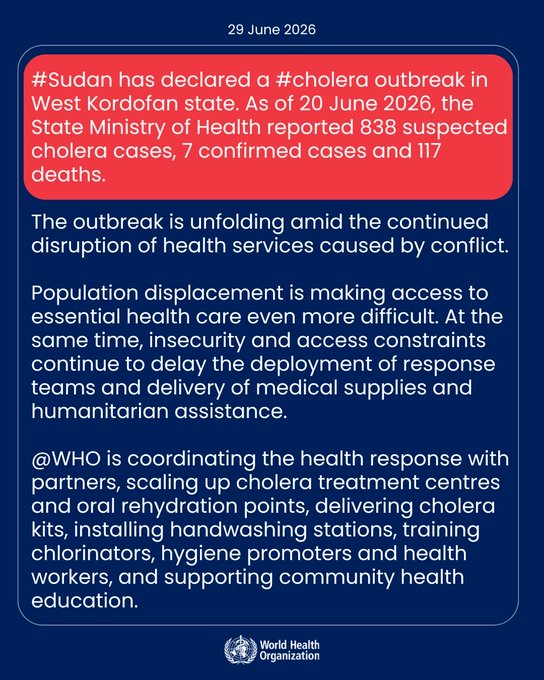
The latest outbreak was officially declared this week by the Sudanese government in West Kordofan State, a key frontline region between the warring factions.
Health officials warned that the disease could worsen as the rainy season approaches, with millions of people lacking access to clean drinking water and flooding expected to further hinder humanitarian and medical assistance.
The WHO also reported nearly 300 suspected cholera cases and three deaths in neighbouring North Kordofan State, raising concerns that the outbreak is spreading to new areas.
The United Nations has warned that continued drone attacks on critical infrastructure, including power stations in North Kordofan’s capital, El-Obeid, are disrupting access to electricity and safe drinking water, increasing the risk of further disease outbreaks.
According to the WHO, about 40 per cent of Sudan’s health facilities are no longer functioning, while the remaining facilities are only partially operational due to the ongoing conflict.
Sudan’s previous cholera outbreak, which lasted from July 2024 to March 2026, infected more than 124,000 people and claimed about 3,500 lives, according to government data.
The conflict, now in its fourth year, has devastated the country’s healthcare system and displaced millions, with humanitarian agencies warning that worsening health conditions could deepen the country’s already severe humanitarian crisis.