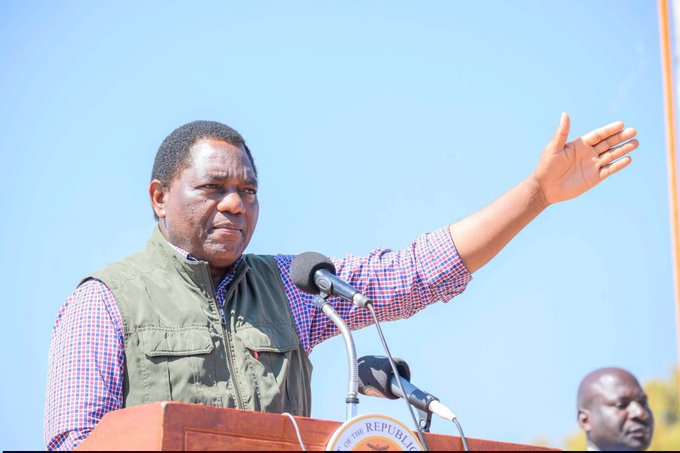
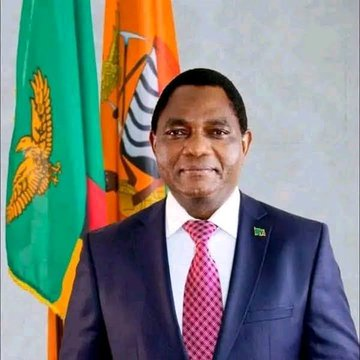
Zambia is preparing for its August presidential election, with incumbent President Hakainde Hichilema seeking a second term against opposition challenger Brian Mundubile in a contest expected to focus on the country’s economic performance.
The election is widely seen as a referendum on Hichilema’s leadership since taking office in 2021, when he inherited an economy burdened by a sovereign debt default and mounting fiscal challenges.

Since then, Africa’s second-largest copper producer has recorded an economic recovery following a successful debt restructuring, stronger copper prices and renewed investor confidence.
Official figures show annual inflation slowed to 6.5 per cent in June, its lowest level in more than eight years, while the International Monetary Fund projects the economy will grow by 4.3 per cent in 2026, up from 3.8 per cent last year.
Despite the improved economic indicators, many Zambians continue to struggle with the high cost of living, an issue the opposition has made central to its campaign.
Speaking at his campaign launch in Lusaka, Hichilema acknowledged the economic hardships facing many households and assured supporters that his government remained committed to improving living conditions.
“We hear you,” the president said, noting that more support would be provided to struggling families.
Hichilema, a 64-year-old businessman, won the presidency by a landslide in 2021 after defeating the late former President Edgar Lungu.
His main challenger, 55-year-old lawyer and Member of Parliament Brian Mundubile, is contesting the presidency for the first time after emerging as the consensus candidate of a united opposition coalition.
Mundubile has criticised the government over what he describes as worsening living conditions, arguing that macroeconomic gains have not translated into better livelihoods for ordinary citizens.
He also accused the government of suppressing political opposition by disrupting campaign activities and restricting dissent, allegations the Hichilema administration has consistently denied.
Concerns have also been raised over Zambia’s 2025 cybercrime law, which civil society groups say could limit freedom of expression, as well as constitutional amendments signed into law last year that expanded the size of parliament.
Critics argue the changes could benefit the ruling party ahead of the election.
Political analysts, however, say Hichilema enters the race with significant advantages as the incumbent, including greater access to state resources and stronger economic credentials.
A survey conducted by the Zambia Election Research Network late last year found that 55 per cent of respondents intended to vote for Hichilema, although the poll was conducted before Mundubile formally launched his campaign.
Observers say while the opposition started its campaign later than the ruling party, it could still mount a competitive challenge as voters weigh economic progress against persistent concerns over the cost of living and democratic governance.