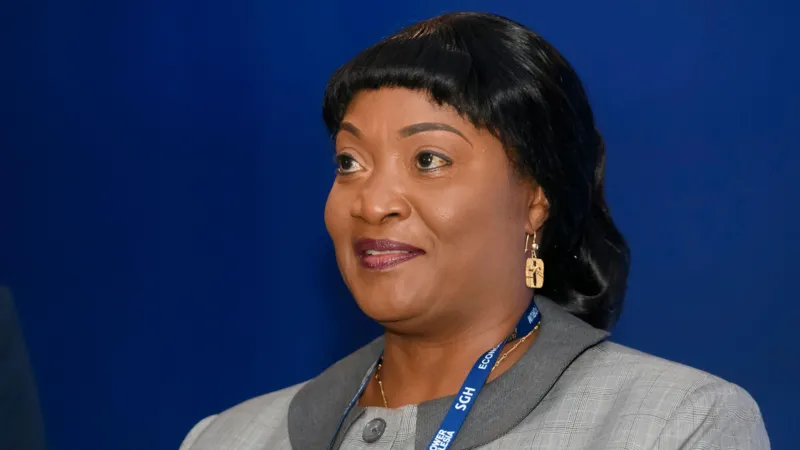
Liberian authorities have charged former Vice President Jewel Howard-Taylor with drug trafficking, money laundering and several other crimes linked to an alleged international narcotics network.
The 63-year-old was detained on Wednesday at Roberts International Airport in Monrovia just before she was set to board a flight, according to the Ministry of Justice.

Police say the case connects to a cocaine seizure last month worth $317m, or about £233m. It was Liberia’s largest drug bust to date. Howard-Taylor has not made a public statement. Her lawyer told the BBC he could not comment until she is formally charged in court.
She faces charges including unlicensed importation, sale and transport of controlled drugs, illicit trafficking, criminal solicitation and criminal facilitation.
Three foreign nationals, two Croatians and one Ukrainian, have also been charged in absentia. Justice Minister Oswald Tweh said Liberia will use both local and international channels to locate and arrest them.
The investigation comes after two major cocaine seizures in June and July. In July, authorities found nearly four tonnes of cocaine believed to be headed for Europe. Officials say the bust exposed a sophisticated transnational ring, and the probe has since expanded to include senior figures in Liberia’s security sector.
In a statement, the government said the crackdown targets not just couriers, but also financiers, organizers and anyone accused of protecting the trade. “No office is too high, no political connection is too powerful, no nationality provides immunity, and no individual is beyond the reach of the law,” it said.
Howard-Taylor entered politics after her ex-husband, former President Charles Taylor, left office. Charles Taylor was later convicted by a UN-backed court for aiding rebels in Sierra Leone’s civil war. Years later, George Weah chose Howard-Taylor as his running mate. She served as vice president from 2018 to 2024.
Liberia and other West African countries have become key transit points for cocaine moving from South America to Europe, which officials say is partly due to porous borders and limited enforcement.