Ugandan officials are gearing up to deploy a trial vaccine as part of efforts to contain an Ebola outbreak in the capital, Kampala.
Scientists are currently developing research protocols for the planned administration of over 2,000 doses of a candidate vaccine targeting the Sudan strain of Ebola, according to Pontiano Kaleebu, executive director of the Uganda Virus Research Institute.

“Regulatory approvals are being fast-tracked,” Kaleebu stated. “This vaccine is not yet licensed.”
The World Health Organization (WHO) confirmed in a statement that it is supporting Uganda’s response to the outbreak, including providing access to 2,160 doses of the trial vaccine.
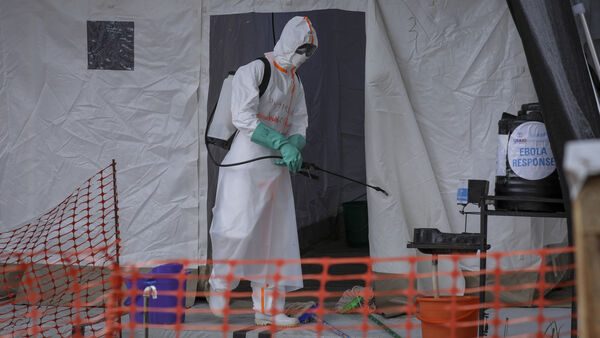
“Research teams have been deployed to the field to work alongside surveillance teams while awaiting approvals,” the WHO said.
The candidate vaccine and potential treatments will be administered through clinical trials to further assess their efficacy and safety. However, the vaccine manufacturer has not been disclosed.
There are currently no approved vaccines for the Sudan strain of Ebola, which claimed the life of a nurse at Kampala’s main referral hospital, Mulago National Hospital, on Wednesday. Authorities declared an outbreak the following day and are still investigating the source. No other confirmed cases have been reported.
Uganda has had access to candidate vaccine doses since the conclusion of a previous Ebola outbreak in September 2022, which resulted in at least 55 deaths. However, officials were unable to initiate a vaccine study before that outbreak ended four months later, Kaleebu noted.
A different trial vaccine, rVSV-ZEBOV, was used to vaccinate 3,000 people at risk of infection during an outbreak of the Zaire strain of Ebola in eastern Congo between 2018 and 2020, proving effective in curbing the disease’s spread.
Uganda has faced multiple Ebola outbreaks, including one in 2000 that killed hundreds. The 2014-2016 West African outbreak remains the deadliest in history, claiming over 11,000 lives.
Contact tracing is crucial in controlling Ebola’s spread, as the virus is transmitted through contact with infected bodily fluids or contaminated materials. Symptoms include fever, vomiting, diarrhea, muscle pain, and, in severe cases, internal and external bleeding.
At least 44 contacts of the deceased nurse have been identified, including 30 health workers and patients, according to Uganda’s Ministry of Health.
Kampala’s outbreak presents a significant challenge due to the city’s highly mobile population of approximately four million people.
Health officials reported that the nurse who died had initially sought treatment at a hospital outside Kampala before traveling to Mbale in eastern Uganda, where he was admitted to a public hospital. Authorities also revealed that he had consulted a traditional healer before his death.