South African President Cyril Ramaphosa described the conclusion of this weekend’s Group of 20 (G20) summit in Johannesburg as a “renewed commitment to multilateral cooperation,” despite tensions with U.S. President Donald Trump, who boycotted the event.
Ramaphosa, hosting the first-ever G20 summit on African soil, successfully pushed through a joint declaration addressing pressing global issues such as climate change, renewable energy transition, and debt relief for developing nations, despite objections from the United States. Argentina, which was present, did not oppose the declaration being issued without its explicit consent.
Speaking at the closing ceremony, Ramaphosa said the declaration reflected that “world leaders’ shared goals outweigh our differences.” The document stressed the urgency of climate action, praised ambitious renewable energy targets, and highlighted the financial burdens faced by poorer nations.
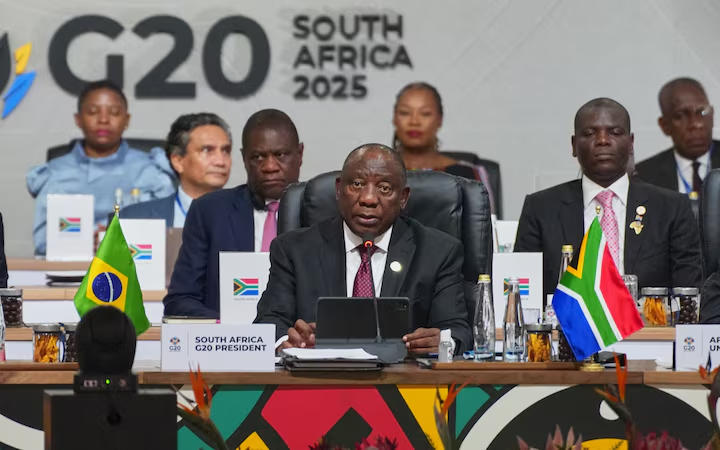
Trump’s boycott was linked to allegations—disputed by independent sources—that South Africa’s Black-majority government persecutes the white minority. He also opposed Johannesburg’s agenda of supporting developing countries in clean energy adoption and climate adaptation.
The summit occurred amid growing tensions over Russia’s war in Ukraine and following the COP30 climate talks in Brazil, where disagreements among oil-producing and high-consuming nations stalled progress on fossil fuel-related measures. Brazil’s President Luiz Inacio Lula da Silva said both G20 and COP30 demonstrated that multilateralism remains “very much alive.”
The summit also saw a diplomatic spat over the G20 presidency handover. South Africa rejected a U.S. proposal to send an embassy official in Trump’s place, which the White House criticized as a breach of protocol. South Africa’s Foreign Minister Ronald Lamola said the country had not received formal communication from Washington but remained open to discussions.
Ramaphosa hailed the summit as a success, noting that it secured recognition of the need for climate finance for developing countries. Leaders also held side meetings to discuss the ongoing Russia-Ukraine conflict and potential avenues for resolution.
The Johannesburg summit highlighted Africa’s increasing role on the global stage while underscoring the challenges of reconciling divergent national priorities in multilateral forums.