Ugandan opposition leader Bobi Wine was cut off from communication on Saturday following a police raid on his residence, as security forces moved to prevent unrest ahead of the announcement of final election results.
Bobi Wine’s party said police and military personnel raided his home late Friday, confiscated phones and restricted access to the property, effectively isolating the opposition leader from the outside world. The development came amid heightened tension following Thursday’s elections, which have been conducted under a nationwide internet blackout.

President Yoweri Museveni, 81, appeared set to extend his nearly 40-year rule, with official results expected later on Saturday. According to the Electoral Commission, Museveni held a commanding lead over Wine, 43, with more than 90 percent of votes counted, polling 71.9 percent against Wine’s 24.5 percent.
Confusion surrounded Wine’s whereabouts after reports emerged that security forces had raided his residence. A senior official of his National Unity Platform party, Nkunyingi Muwada, told AFP that security personnel dressed in black scaled the walls of Wine’s compound and seized communication devices belonging to those inside.
Wine’s son, Solomon Kampala, who is currently outside the country, claimed on social media that his father managed to escape during the raid, although this could not be independently confirmed. AFP journalists were prevented from accessing the residence on Saturday morning and were unable to reach Wine or his aides by phone.
Police spokesman Kituuma Rusoke said security agencies had restricted access to what they described as “security hotspots,” insisting that the measures were aimed at preventing violence.
“We have not necessarily denied people access to Bobi Wine, but we cannot tolerate situations where his residence is used to mobilise crowds and incite violence,” Rusoke said.
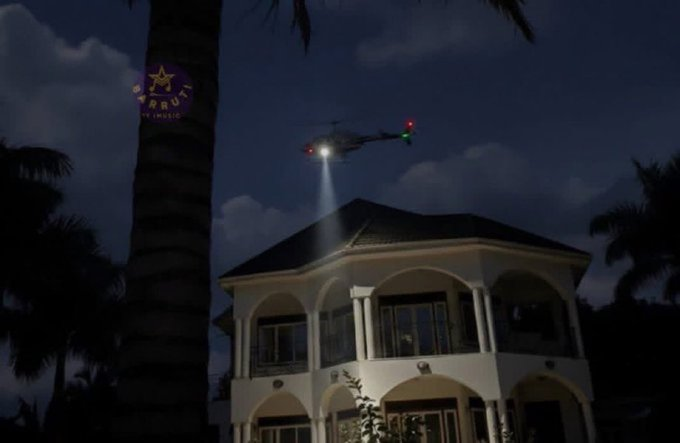
Earlier, Wine’s party had alleged on social media that he was forcibly taken away by an army helicopter, but later deleted the claim. The army strongly denied the report, describing it as “absurd” and accusing opposition figures of attempting to inflame tensions.
Residents in the area reported a heavy security presence around Wine’s home. A nearby shop owner, Prince Jerard, said he heard a helicopter and a drone overhead on Friday night, adding that many people had fled the neighbourhood out of fear.
“There is a lot of fear here,” he said. “Many people have left the area.”
Wine, whose real name is Robert Kyagulanyi, has emerged in recent years as Museveni’s strongest political challenger. A former pop star, he has styled himself the “ghetto president,” drawing support from young voters and residents of Kampala’s poorer neighbourhoods.
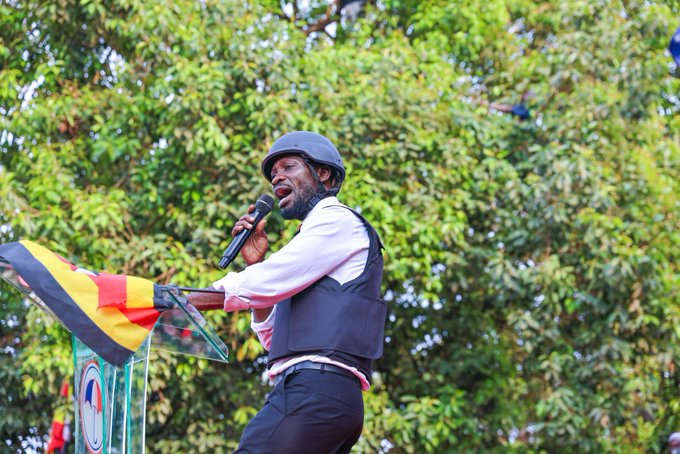
He has accused the government of widespread electoral malpractice, including ballot stuffing and attacks on his party officials during the internet shutdown imposed ahead of the vote. While these allegations could not be independently verified, the United Nations human rights office last week warned that the elections were taking place in an atmosphere of “widespread repression and intimidation” against the opposition.

Election day itself was marred by logistical failures, including malfunctioning biometric voter verification machines and delayed delivery of ballot papers in several regions.
There were also reports of violence in parts of the country. Muwanga Kivumbi, a lawmaker from Wine’s party, alleged that security forces killed 10 of his campaign agents after storming his home in central Uganda. Police disputed the claim, saying an unspecified number of people were neutralised after opposition supporters allegedly attempted to attack a tally centre and police station.
Analysts have long described the election as a foregone conclusion, citing Museveni’s firm grip on state institutions and the security apparatus since he came to power in 1986.