Mali’s armed forces, alongside their Russian mercenary allies, have withdrawn from a key northern military base, handing control to armed rebel groups as the country’s security crisis deepens.
The development follows a series of coordinated attacks by Tuareg separatists and jihadist fighters, who have formed a rare alliance aimed at toppling the ruling military junta.
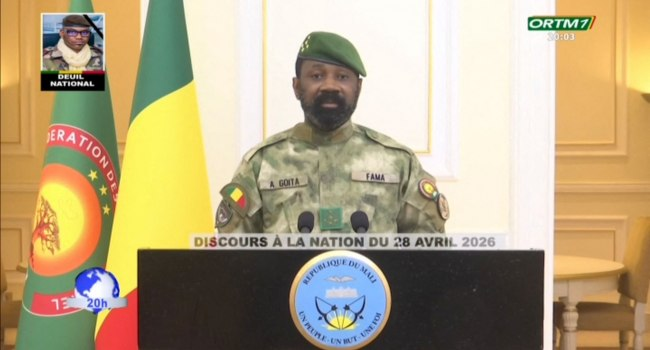
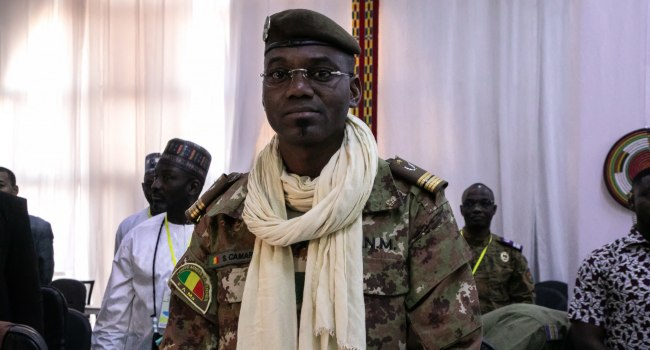
Rebel forces, led by the Azawad Liberation Front (FLA) and supported by the al-Qaeda-linked Group for the Support of Islam and Muslims (JNIM), launched large-scale assaults on several military positions last weekend. The attacks reportedly resulted in significant casualties, including the death of Mali’s Defence Minister, Sadio Camara.
On Friday, fighters entered the strategic Tessalit military “super-camp” near the Algerian border after Malian troops had already withdrawn. Security sources indicated that no direct fighting occurred at the base, as government forces had evacuated prior to the rebels’ arrival. Local officials also confirmed that Russian personnel stationed at the base had abandoned their positions.
Tessalit is considered a critical military asset due to its location in northern Mali and its airstrip, which can accommodate helicopters and large aircraft. The base had housed a considerable number of troops, as well as military equipment.
In a further setback, Malian forces were also reported to have pulled out of another base in Aguelhok, located about 100 kilometres south of Tessalit.
The fall of these positions comes amid escalating tensions, with JNIM imposing a blockade around the capital, Bamako, restricting movement out of the city.
The recent wave of violence marks one of the most significant offensives in Mali in over a decade. Fighting across multiple regions, including areas near Bamako, has left dozens dead and heightened fears of further instability.
A government investigation has alleged that some serving and former military personnel may have been involved in planning and executing the attacks. The probe also linked exiled opposition figure Oumar Mariko to the incidents.
Humanitarian concerns are also mounting. The United Nations Children’s Fund (UNICEF) reported that civilians, including children, were killed and injured during the attacks. It also cited incidents involving attacks on health facilities and the occupation of a school by armed groups.
In recent years, Mali—alongside Burkina Faso and Niger—has shifted alliances away from France and strengthened ties with Russia. The three countries have formed the Alliance of Sahel States (AES), which maintains a joint military force to combat insurgency in the region.
Despite ongoing counteroffensives, including reported air campaigns by the AES alliance, jihadist groups such as JNIM continue to expand their operations, raising concerns about the stability of the Sahel region.