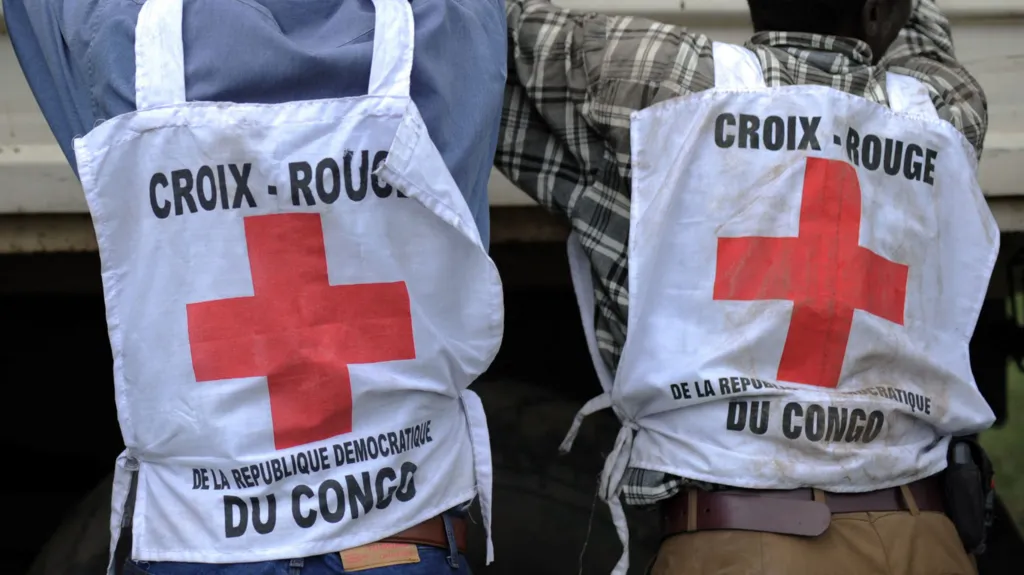
Three Red Cross volunteers have died in the Democratic Republic of Congo (DRC) from suspected Ebola infection, likely contracted while handling dead bodies during community response work, the International Federation of Red Cross and Red Crescent Societies (International Federation of Red Cross and Red Crescent Societies) has confirmed.
The volunteers are believed to have been exposed on 27 March while working in Mongwalu, in the eastern Ituri province, on an assignment unrelated to Ebola before the outbreak was officially identified. The deceased — Alikana Udumusi Augustin, Sezabo Katanabo, and Ajiko Chandiru Viviane — died between 5 and 16 May after serving their communities.
Health authorities say Ebola virus can remain highly infectious in the bodies of deceased patients, making safe handling of corpses a major transmission risk.
The outbreak, which involves a rare strain known as Bundibugyo Ebola virus disease (Ebola), has so far resulted in more than 170 suspected deaths and about 750 suspected cases in the region. The strain is reported to kill roughly one-third of those infected and currently has no proven vaccine.
The World Health Organization (World Health Organization) has raised its assessment of the public health risk in the DRC from “high” to “very high,” while warning that the risk remains significant for neighbouring countries but low globally.
Uganda has already confirmed additional infections linked to cross-border movement, bringing its total cases to five. The Africa Centres for Disease Control and Prevention has also flagged several countries — including Angola, Burundi, the Central African Republic, Republic of Congo, Ethiopia, Kenya, Rwanda, South Sudan, Tanzania, and Zambia — as being at risk.
To contain the spread, authorities in the DRC have suspended all commercial and private flights to and from Bunia, the capital of Ituri province, except for approved humanitarian and emergency operations.
Humanitarian efforts have also been disrupted by insecurity and community resistance. In Mongwalu, an MSF-provided treatment tent was set on fire, while elsewhere in Ituri a hospital was partially burnt after locals attempted to retrieve the body of a suspected Ebola victim for burial.
Médecins Sans Frontières (MSF) said the incidents reflect growing fear and uncertainty among residents, stressing that sustained community engagement is essential to building trust and improving outbreak response.
The outbreak has also been complicated by ongoing armed conflict in parts of eastern DRC, particularly in areas of Ituri, North Kivu, and South Kivu, some of which are affected by clashes involving the M23 rebel group.