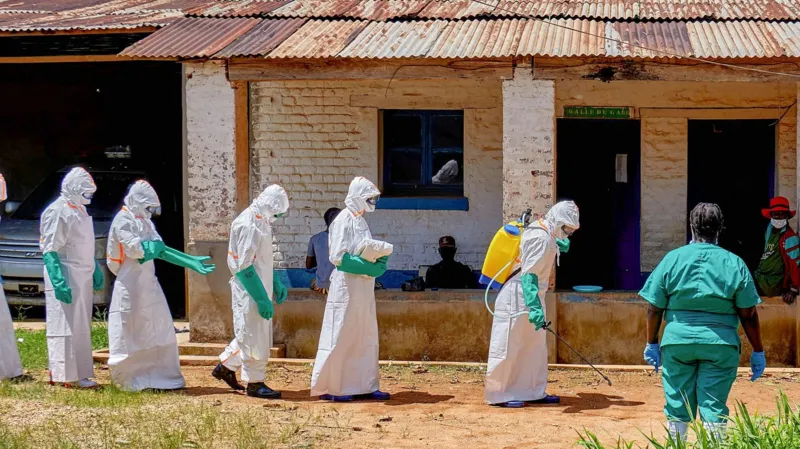
Police in Mongwalu, in eastern Democratic Republic of Congo, fired shots in the air on Sunday to disperse crowds that tried to reclaim the bodies of relatives who had died at an Ebola treatment centre, according to local journalists who spoke to the BBC.
The unrest at Mongwalu General Hospital continued throughout the day. The facility had already been targeted earlier in the weekend when an isolation tent was set ablaze overnight on Friday into Saturday.

Hospital officials said the crowds demanded the bodies of two people, including a local Catholic religious leader. The hospital’s medical director, Dr Richard Lokudu, said the hospital was on general alert.
Ebola victims’ bodies remain highly infectious and can spread the virus if not handled through safe burial procedures. Red Cross volunteers are conducting these burials under police protection, but the process has fuelled mistrust in some communities. Three volunteers have died from suspected Ebola likely contracted while managing bodies.
The incident follows similar unrest on Thursday in Rwampara, 85km southeast of Mongwalu, where crowds set fire to isolation tents after being stopped from taking a suspected Ebola victim for burial.
The current outbreak has led to more than 900 suspected cases and 220 suspected deaths, according to officials. On Monday, Uganda confirmed two new cases among health workers, bringing its total to seven infections and one death. Contacts are being traced.
The Africa Centres for Disease Control and Prevention has warned that other countries, including Angola, Burundi, Kenya, Rwanda, South Sudan, Tanzania, and Zambia, are at risk. Africa CDC Director-General Dr Jean Kaseya said health ministers from DR Congo, Uganda, and South Sudan had agreed on a $319 million plan to contain the outbreak. About 10 percent of the funding has been secured so far, with South Africa pledging $5 million.
The outbreak is caused by the Bundibugyo strain of Ebola, which has not been seen for over a decade. There are currently no approved vaccines or treatments for this strain. The World Health Organization said it could take up to nine months to develop a vaccine and has declared the outbreak a public health emergency of international concern.
Parts of the affected areas in North and South Kivu provinces are under the control of the M23 rebel group, complicating response efforts.