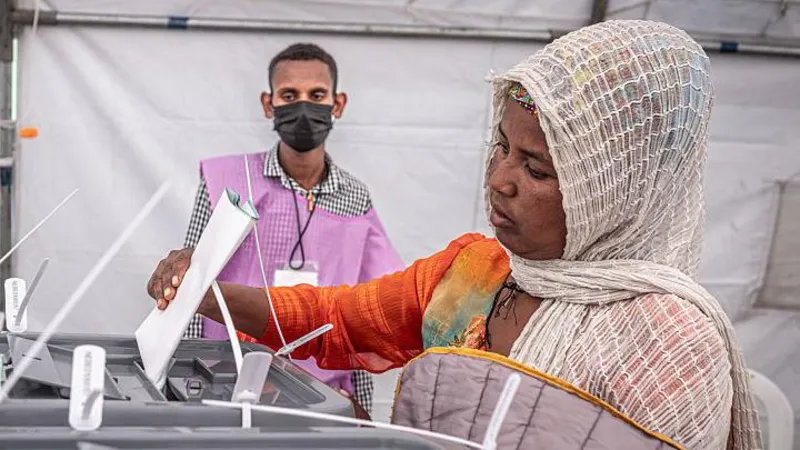
Ethiopia’s general election kicked off Monday, but voting was suspended in parts of Oromia and Amhara regions after security threats made polling impossible. The electoral commission said 143 of more than 50,000 stations failed to open. Long queues still formed elsewhere as voters turned out.
The poll excludes all of Tigray, Africa’s second most populous country’s northern region, which is still recovering from a civil war that ended in 2022. It’s the seventh national election since the 1991 fall of the Marxist military regime.

Prime Minister Abiy Ahmed cast his ballot and praised Ethiopia’s democratic progress since 1991. “The Ethiopian people have demonstrated that they do not need anyone to advise or lecture them,” he said. Abiy’s Prosperity Party is expected to win the 547-seat parliament again. A party needs 274 seats to form government. But opposition figures call this the least competitive vote in years. Prof Merera Gurdina of the Oromo Federalist Congress said his party is running mainly to avoid being deregistered. Media access is tight: the BBC and others were denied accreditation. Kenya’s former President Uhuru Kenyatta, observing for the AU, said voting looked smooth. Amhara and Oromia face ongoing insurgencies. Fano militias in Amhara refused to disband in 2023, saying it would leave the region exposed. The Oromo Liberation Army, labeled a terrorist group by parliament, wants more autonomy for Oromos. Acled reports over 9,400 people were killed in those regions in 2024. The government says 97% of areas are ready to vote, but opposition alliance leaders say campaigning was impossible there. Tigray’s 6 million residents won’t vote. A dispute between Addis Ababa and the TPLF over interim leadership and party registration led the election board to cancel all 38 constituencies there. Tensions are also rising with Eritrea over Red Sea access, adding risk of renewed conflict.
Voter mood
More than 50.5 million people registered. Young voters in Addis Ababa say they want stability above all. “If instability arises, I may not be able to continue my education,” student Fenet Dereje told the BBC. Abiy’s party won by a landslide in 2021, and a deputy PM said this time they don’t aim for 100% of seats.