Senegal’s President, Bassirou Diomaye Faye, has been elected as the new Chairman of the Authority of Heads of State and Government of the Economic Community of West African States (ECOWAS).
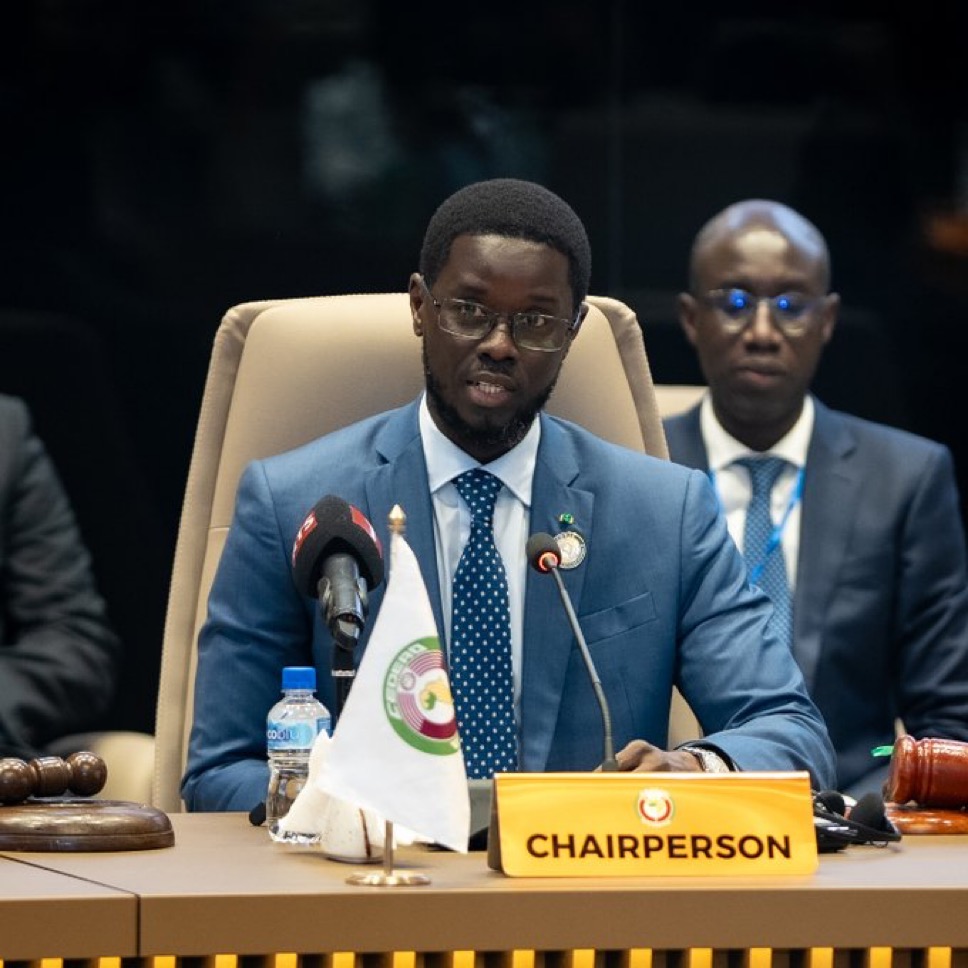
Faye emerged as the bloc’s new leader at the end of the 69th Ordinary Session of the ECOWAS Authority, held on Sunday in Freetown, Sierra Leone.
He succeeds Sierra Leone’s President Julius Maada Bio, who had chaired the regional body since June 2025. The official handover took place at the Julius Maada Bio International Conference Centre, where West African leaders gathered for the bloc’s mid-year summit.
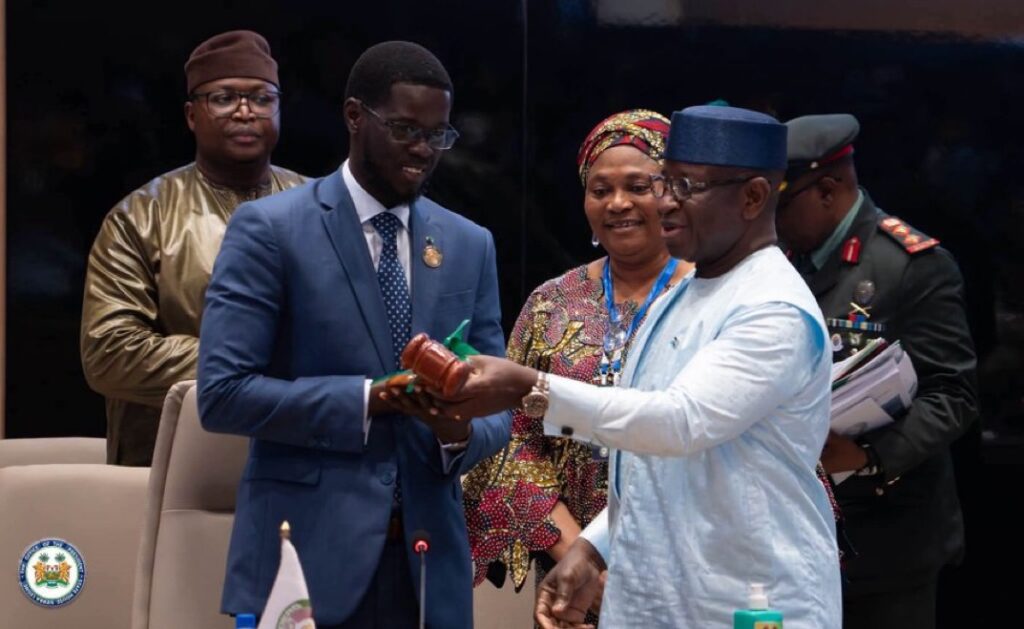
The meeting focused on major policy decisions, strategic resolutions, and reaffirmed the commitment of member states to promoting peace, democracy, economic development, and regional integration across West Africa.
Nigeria was represented at the summit by Vice President Kashim Shettima, who attended on behalf of President Bola Tinubu. Shettima departed Abuja earlier on Sunday to participate in the meeting alongside other political and business leaders from across the region.
Faye’s election marks a significant milestone for Senegal, coming a year after he narrowly missed out on the rotating chairmanship.
During the 67th Ordinary Session held in Abuja in June 2025, Faye had been widely tipped to assume the ECOWAS leadership, with reports indicating that his candidacy enjoyed broad backing among member states. However, in an unexpected outcome, President Bio was elected chairman instead, despite speculation that Faye had secured support during consultations held before the summit.
At the time, the withdrawal of Mali, Burkina Faso, and Niger from ECOWAS, which became effective in January 2025, reshaped the bloc’s political dynamics. The exit of the three Sahel nations weakened the francophone voting bloc and altered the balance of influence within the organisation, complicating Senegal’s bid for the chairmanship.
With President Bio’s tenure now concluded and Senegal enjoying increased regional influence, Faye has finally assumed the leadership of the regional bloc, a position many observers believed the country had been poised to occupy a year earlier.