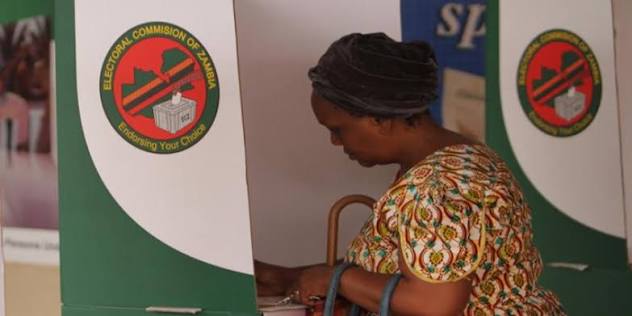
Zambians head to the polls on Thursday in a closely watched presidential election that will test whether the government’s economic recovery can overcome growing concerns over the cost of living.
More than 8.7 million registered voters are expected to participate in the August 13 election, which will determine whether President Hakainde Hichilema wins a second term or whether the opposition can capitalise on public frustration over economic conditions.


Hichilema, leader of the United Party for National Development (UPND), came to power in 2021 after defeating then-President Edgar Lungu, marking a peaceful transfer of power from one political party to another.
He inherited an economy struggling under a heavy debt burden after Zambia defaulted on its sovereign debt in 2020. His administration has since overseen significant progress in restructuring the country’s debt and completed a $1.7 billion International Monetary Fund programme aimed at restoring economic stability.
Despite those gains, many Zambians continue to face high living costs, unemployment and economic hardship. The contrast between improved economic indicators and the everyday experiences of households has become a central issue in the election campaign.
Hichilema’s main challenger is Brian Mundubile, who emerged as the presidential candidate of the opposition Tonse Alliance following a reorganisation of the opposition ahead of the election.
The opposition has sought to turn dissatisfaction over living conditions into a broader challenge to Hichilema’s economic record, while the president’s campaign has pointed to improvements in economic stability and investment.
Copper is another major issue in the election. Zambia is Africa’s second-largest copper producer and has set an ambitious target of increasing annual production to three million tonnes. The mining industry remains central to the country’s economy, accounting for a significant share of export earnings and government revenue.
However, power shortages pose a major challenge to the expansion of mining and other industries. Investors are also watching whether the next government can attract further investment, improve infrastructure and create jobs from the country’s mineral wealth.
The election is also being closely watched for its implications for Zambia’s democratic reputation. While the country has long been regarded as one of Africa’s more stable democracies, the campaign has been marked by concerns over political tensions, restrictions on opposition activity and the narrowing of political space.
The result will therefore be a test not only of Hichilema’s economic record but also of whether Zambia can maintain its reputation for peaceful political transitions while addressing the economic pressures facing ordinary citizens.
Presidential results are expected by August 17, according to the electoral commission’s calendar.