One of Nigeria’s oldest Islamic bodies, Jama’at-ul Islamiyya of Nigeria, has unveiled a Centenary School Project to expand its network of schools and raise a generation grounded in modern learning, Islamic ethics and civic responsibility.
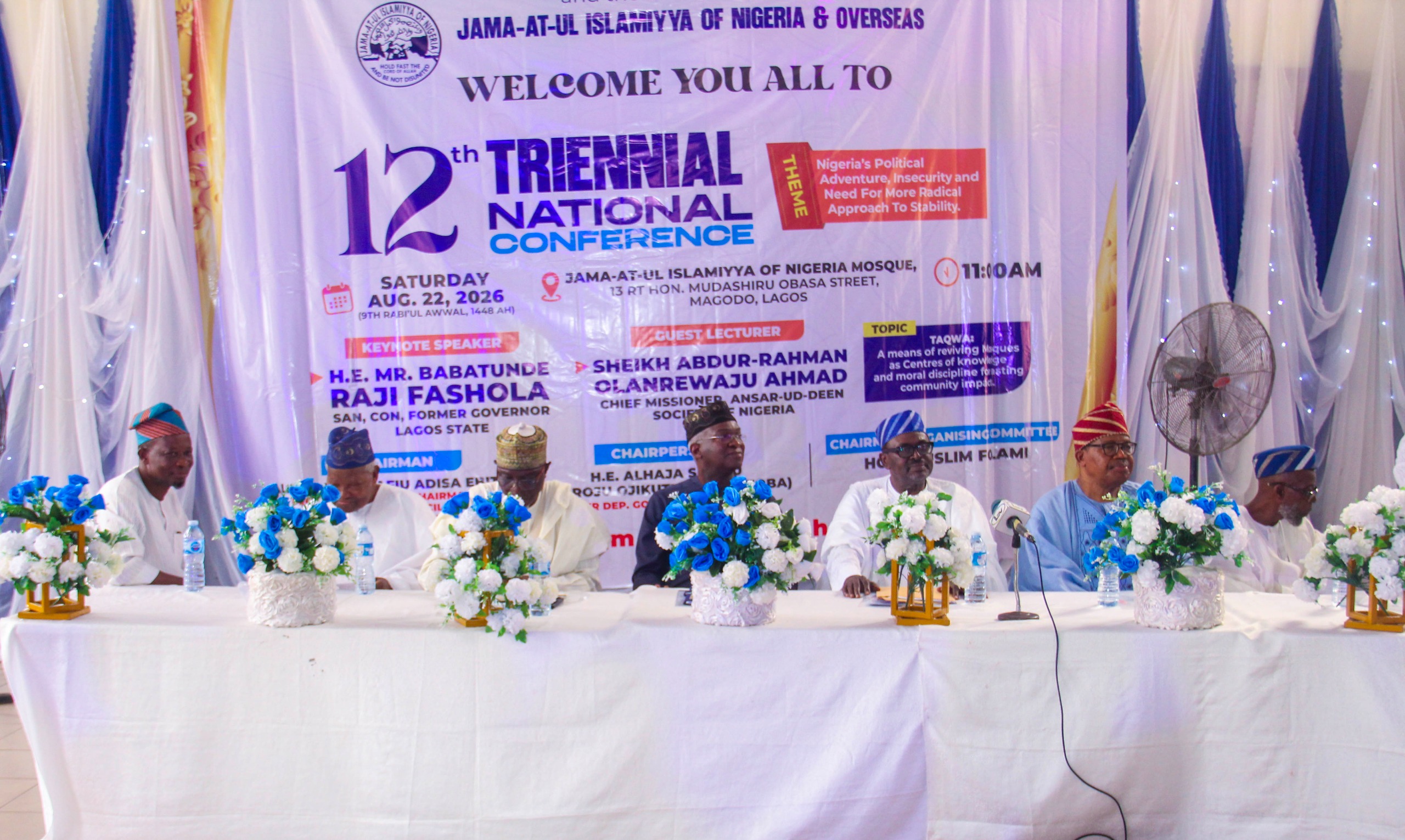
The announcement was made on Saturday, August 22, 2026, during the organisation’s 12th Triennial National Conference held at the Jama’at-ul Islamiyya of Nigeria Mosque in Magodo, Lagos.


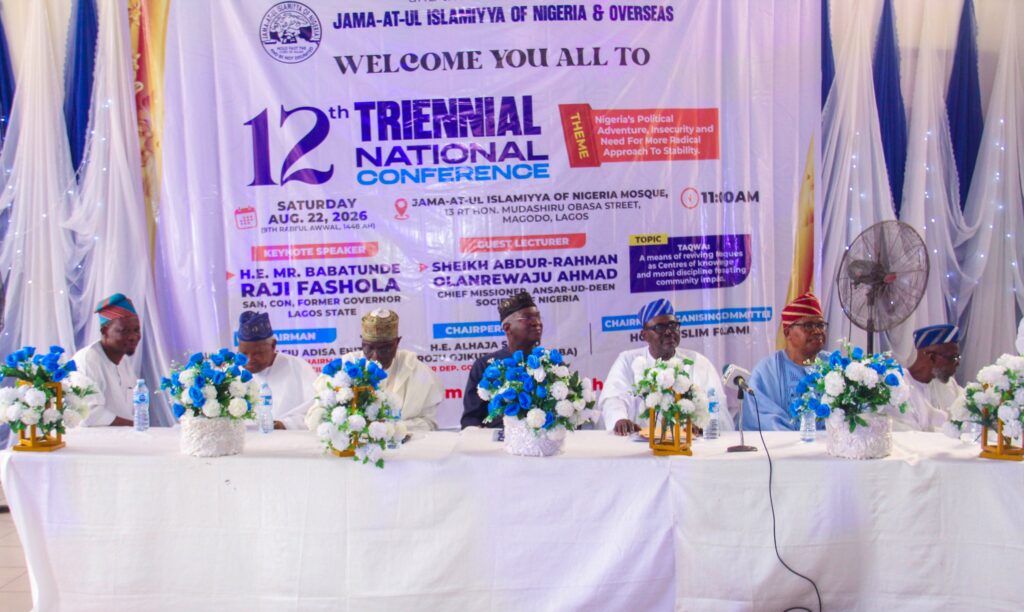
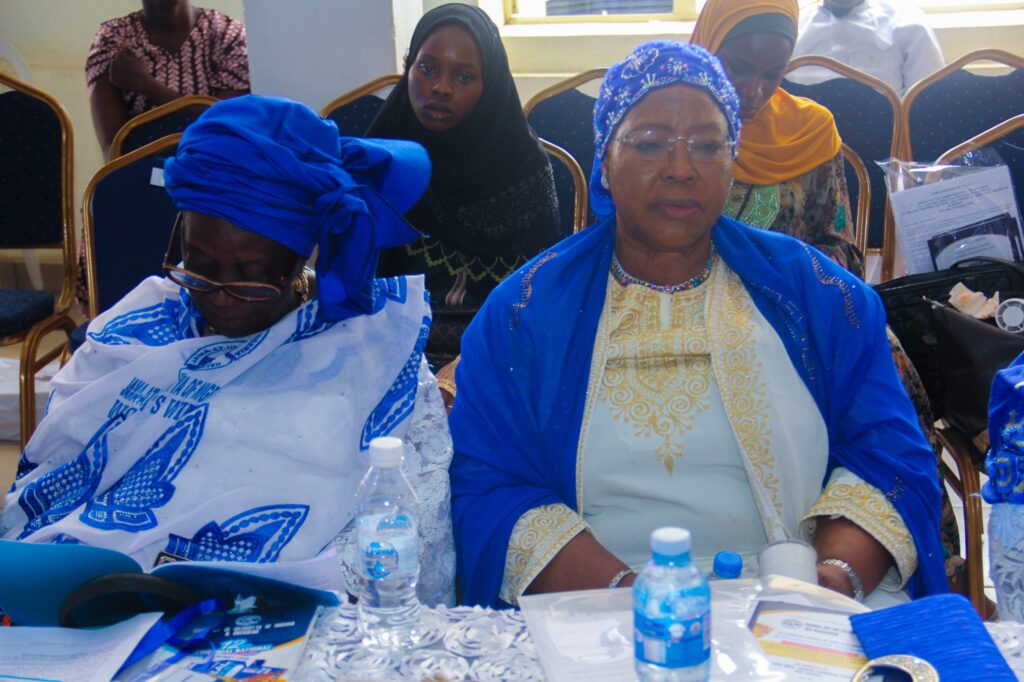
The conference, themed “Nigeria’s Political Adventure, Insecurity and Need for More Radical Approach to Stability,” drew the Board of Trustees, Council of Elders, National Executive Council, spiritual leadership, branch and divisional leaders, women and youth leaders, Muslim scholars and other stakeholders.
Alhaji Rafiu Adisa Ebiti, Pro-Chancellor and Chairman of the Governing Council of Crescent University, Abeokuta, chaired the event. Former Deputy Governor of Lagos State, Alhaja Sinatu Aderoju Ojikutu, nee Adeoba, served as chairperson.
Centenary School Project put forward as transformation tool
Jama’at-ul Islamiyya President, Engr. Hashim Oyekan, said the school project reflects the group’s long-term plan to use education to reshape society and prepare future leaders.
He explained that the initiative is designed to mobilise resources for the development of the Jama’at’s group of schools and to deliver accessible, high-quality modern education firmly rooted in Islamic values.
“Education remains the most powerful tool for social transformation and moral elevation,” Oyekan said, adding that the goal is to equip young Nigerians to lead with both competence and conscience.
He appealed to guests, donors and members to support the Centenary School Project, describing contributions as an investment in a legacy that will benefit generations. The organisation also called for donations toward the project and other Jama’at programmes.
Leaders link insecurity to weak values, push for active mosques
In his welcome address, Oyekan said the conference came at a pivotal moment, with Nigeria facing complex socio-political and security challenges. He argued that religious organisations cannot stay aloof and must contribute to national development.
“Stability cannot be achieved through rhetoric alone; it demands actionable solutions, unyielding justice, and a collective commitment from both leadership and the citizenry,” he said.
Oyekan said political and economic strategies must be anchored on moral discipline. He tied that to the Jama’at’s push to revive mosques as centres of knowledge, moral character formation and community development, not only as places of ritual worship.
Fashola: Restore law and order first
Delivering the keynote, former Lagos State Governor and former Minister of Works and Housing, Mr. Babatunde Raji Fashola, SAN, called for a radical approach to insecurity.
He said Nigeria must restore respect for law and order, strengthen law enforcement institutions, and confront the values shaping citizens’ conduct. According to him, restoring law and order should be the first radical step toward stability, and it requires a collective commitment to a society where nobody is above the law, regardless of political affiliation, religion or ethnicity.
Fashola also urged Nigerians to examine the values being passed to younger generations.
Adangba: Strong mosque leadership needed to reverse decay
The conference featured a lecture titled, “Taqwa: A Means of Reviving Mosques as Centres of Knowledge and Moral Discipline for Lasting Community Impacts.”
The scheduled guest lecturer, Chief Missioner of Ansar-Ud-Deen Society of Nigeria, Sheikh Abdul Rahman Ahmad Olanrewaju, was represented by Sheikh Sulaiman Adangba, Chief Imam of Muhammad Rasulullah Mosque, Surulere, Lagos.
Adangba identified family, social and economic factors as drivers of confusion and decay in society, and said they must be addressed at the root.
“The whole lecture is about the structure for the Muslim Ummah,” he said, describing the mosque as the House of Allah where Muslims should gather not only to worship but also to deliberate on their collective future and contribute to societal development.
He stressed that knowledge, wisdom, justice and effective mosque leadership are critical to achieving that transformation.
Muslim News Nigeria said the full keynote address by Fashola and the full lecture by Adangba will be published in separate reports.
Leadership handover at 12th Triennial
The conference also marked the formal transition from the outgoing administration to a new leadership team.
Oyekan described leadership in Islam as a sacred trust, or Amanah. He thanked the Executive Council, scholars and members for their support, dedication and prayers during his tenure.
“As my tenure draws to a close, I express my deepest gratitude to the Executive Council, our scholars, and every member of Jama’at-ul Islamiyya for your unwavering support, dedication, and prayers throughout my stewardship,” he said.
He prayed that Allah grants the incoming Executive Council the wisdom, strength and guidance to take the organisation to greater heights.