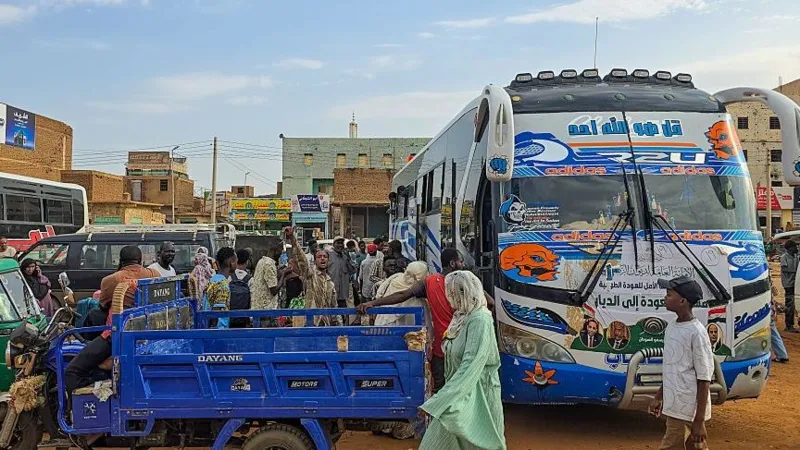
Sudan’s military-led government has lifted a night-time curfew and the state of emergency in Khartoum more than two years after they were first imposed, state media reported.
The decision comes about 18 months after the army pushed the paramilitary Rapid Support Forces out of the capital.
Fighting between the army and RSF started in April 2023 and is now in its fourth year. While Khartoum is no longer an active front line, battles continue in the south and west.
The change is meant to help life in the capital return to normal. Since the army regained control of Khartoum in March 2025, more than 2 million of the roughly 5 million people who fled have come back, according to the International Organization for Migration.
Authorities have also reopened the city’s main airport for limited flights and are urging businesses and embassies to resume operations.
Daily life remains difficult. Many returnees found homes and shops looted and damaged. Power cuts are frequent.
Altayeb Saadeldin, a spokesperson for the Khartoum state government, told Reuters that RSF drone strikes on power facilities, along with theft of copper wire, fuel and other equipment, and a lack of repair funds, have crippled the electricity network. An RSF source dismissed the claims as “incorrect and army propaganda.”
Even with the curfew gone, security measures stay in place. The Sudan News Agency said patrols will continue across the state and people moving at night must carry identification.
BBC Monitoring reports the army is still conducting sweeps in greater Khartoum for suspected RSF sleeper cells, undocumented foreigners and criminal groups.
The conflict is increasingly spilling over. On August 20, Chad accused the Sudanese army of carrying out an air strike that hit a military convoy about 100km inside Chad’s Ennedi-Est province.
Chad put border forces on high alert. Sudan denied the accusation and said it was unfair to assign blame without an independent investigation.
In a foreign ministry statement, Sudan said its army acts to defend sovereignty while respecting neighbours, and accused Chad of allowing the UAE to move RSF supplies through its airports and borders.
The UAE and Chad reject that claim, even though UN experts and international media have reported similar findings.
US Senior Adviser for Arab and African Affairs Massad Boulos said he is “deeply concerned” about regional stability.
He condemned the reported strikes inside Chad on X and called for an immediate humanitarian truce, arguing there is “no military solution” and “no justification for expanding the violence beyond Sudan’s borders.” Boulos also said external financial and military support to both sides must end.
This month, the US put forward a draft UN Security Council resolution to expand a 2005 Darfur weapons embargo nationwide and ban attack drones, which both sides now use heavily.
Sudan’s government rejected it, saying it wrongly equates the national army with a paramilitary group and would limit its ability to protect civilians.