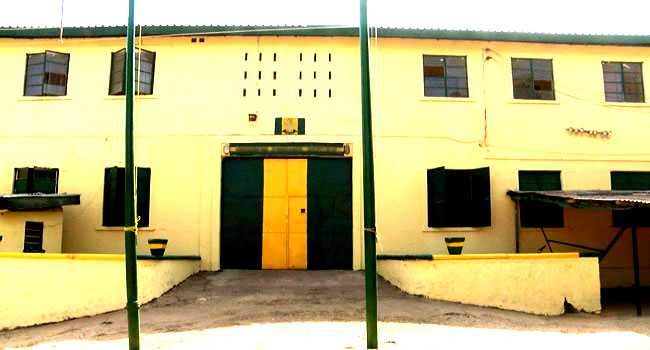
The Independent National Electoral Commission (INEC) has reaffirmed its commitment to enabling inmates in Nigeria’s correctional facilities to exercise their right to vote, in line with a series of judicial rulings and international human rights conventions.
INEC Chairman, Professor Mahmood Yakubu, made this known on Friday during a meeting with the Comptroller General of the Nigeria Correctional Service (NCoS), Sylvester Nwakuche, at the Commission’s headquarters in Abuja.


Yakubu stressed that the right to vote is a fundamental human right that should not be denied to Nigerian citizens simply because they are serving time in correctional facilities.
He cited judgments from both the Federal High Court and the Court of Appeal in Benin—delivered in 2014 and 2018 respectively—which upheld the rights of inmates awaiting trial to register and vote in elections.
The courts based their decisions on Article 25 of the International Covenant on Civil and Political Rights (1966) and Section 25 of the 1999 Constitution, affirming that inmates retain their civic rights unless explicitly disqualified by law.
However, Yakubu noted that the courts also ruled that the exercise of this right must be voluntary, not enforced by state authority.
Recognizing the legal and logistical challenges, Yakubu emphasized the need for the National Assembly to enact clear legislation that would provide unambiguous legal backing for inmate voting.
He stressed that electoral processes are governed by law and called for collaboration between INEC, the NCoS, and lawmakers to seize the opportunity presented by ongoing electoral reforms.
INEC has already held several meetings with the NCoS to explore modalities for allowing inmates to vote. These include discussions on voter registration access, the creation of polling units within correctional facilities, and ensuring transparency through observer access and media coverage. Political parties have also raised concerns about the feasibility of campaigning within correctional centres and the appointment of polling agents for election day.
A joint technical committee was previously established to review these issues, and NCoS has provided INEC with comprehensive data on federal correctional facilities and inmate categories. Yakubu acknowledged that the majority of the over 81,000 inmates in Nigeria are awaiting trial and may, in fact, already be registered voters.
He further highlighted the ambiguity in Section 12(1)(e) of the Electoral Act 2022, which restricts voter registration to Nigerians who are “not subject to any legal incapacity to vote.” This clause, Yakubu said, requires clarification to determine whether it applies to specific categories of inmates, such as those on death row or serving life sentences.