President Bola Tinubu has signed the 2026 Appropriation Bill into law, approving a total expenditure of ₦68.32 trillion for the fiscal year.
He also assented to a separate bill extending the implementation of the 2025 budget from March 31 to June 30, 2026, to allow for the completion of ongoing capital projects.


According to a statement issued on Friday by presidential spokesman Bayo Onanuga, the 2026 budget includes ₦4.799 trillion for statutory transfers, ₦15.8 trillion for debt servicing, ₦15.4 trillion for recurrent expenditure, and ₦32.2 trillion allocated to capital projects through the Development Fund.
The presidency noted that nearly half of the total budget is dedicated to capital expenditure, reflecting the administration’s focus on infrastructure development, economic stability, national security, and inclusive growth.
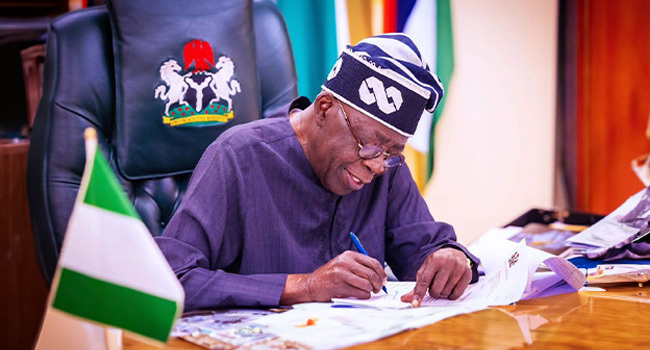
It added that the allocations were carefully structured to balance statutory obligations, debt commitments, and investments aimed at boosting productivity and improving living standards.
The 2026 Appropriation Act took effect on April 1, with full implementation already underway in line with the administration’s Renewed Hope Agenda.
Tinubu also signed the Appropriation (Repeal and Enactment) (Amendment) Bill, 2026, which extends the capital component of the 2025 budget by three months. The move is expected to ensure optimal utilisation of funds, particularly for key infrastructure projects nearing completion.
“The extension will ensure the full and effective utilisation of appropriated funds, particularly for critical infrastructure and development projects at advanced stages,” the statement said, adding that it would help Ministries, Departments and Agencies (MDAs) improve project completion rates and maximise value for public spending.
The President directed all MDAs to ensure transparency, discipline, and efficiency in the use of public funds, with emphasis on value for money and timely execution of projects.
He also commended the National Assembly of Nigeria for its cooperation and swift passage of the budget, describing the process as a demonstration of patriotism and effective collaboration between the executive and legislative arms of government.
Tinubu reaffirmed his administration’s commitment to deepening fiscal reforms, increasing revenue generation, and prioritising investments that will stimulate economic growth, create jobs, and strengthen social protection systems.
Originally presented to lawmakers in December 2025 at ₦58.47 trillion, the budget was later revised upward to ₦68.32 trillion following legislative review.
Tagged “The Budget of Consolidation, Renewed Resilience and Shared Prosperity,” it is built around key objectives including sustaining macroeconomic stability, improving the investment climate, promoting job creation, and strengthening human capital development while protecting vulnerable groups.
Key sectoral allocations include ₦5.41 trillion for defence and security, ₦3.56 trillion for infrastructure, ₦3.52 trillion for education, and ₦2.48 trillion for health, underscoring the government’s priorities for the year.