The Democratic Republic of Congo has banned mass gatherings in Kinshasa and three nearby provinces to curb the spread of Ebola, Interior Minister Jacquemain Shabani announced Saturday.
While no Ebola cases have been confirmed in Kinshasa, officials are worried the virus could reach the city of 18 million. The outbreak is currently centered 1,800 km away in the eastern provinces of Ituri, North Kivu, and South Kivu. The new restrictions also cover Tshopo, Haut-Uele, and Bas-Uele, which border the affected zones. Those three eastern provinces already had gathering bans in place for weeks.


The timing of the ban has drawn criticism from opposition leaders. They claim it’s aimed at blocking a protest march planned for July 8 by the C64 coalition. The group opposes a proposed law that could allow President Félix Tshisekedi to extend his rule beyond the two-term limit.
“This decision is political, not medical,” said Prince Epenge, spokesperson for the Lamuka opposition coalition, in comments to the BBC. “There are no confirmed cases in Kinshasa. We reject this order.”
Rodrigue Ramazani, secretary-general of the Envol party, also called the directive a “political maneuver” and urged supporters to attend the march anyway. The government has not responded to the accusations.
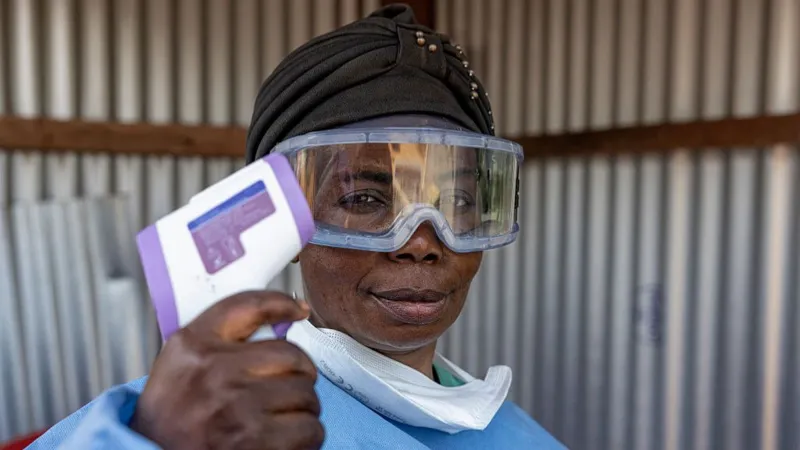
Health concerns were heightened after a Congolese doctor tested positive for Ebola in France. The doctor had traveled through Kinshasa on his way home from an Ebola treatment center in the outbreak zone. The day after his case was made public, authorities imposed a 21-day quarantine for travelers coming from affected areas.
As of Saturday, the health ministry reported 1,274 infections and 360 deaths across Ituri, North Kivu, and South Kivu. Ituri accounts for over 90% of cases. Neighboring Uganda has also confirmed 20 infections and 2 deaths, according to the WHO.
This outbreak involves the Bundibugyo strain of Ebola, which currently has no vaccine. But the head of Africa CDC told BBC Newsday that trials for new antiviral drugs could start this week. Both Africa CDC and U.S. health officials warn this could become one of the largest Ebola outbreaks ever, because it circulated for weeks before being identified.
Efforts to contain it are further complicated by conflict. The M23 rebel group controls large areas of North and South Kivu, making access for health teams difficult, the WHO says.
Ebola spreads through contact with infected bodily fluids like blood or vomit.