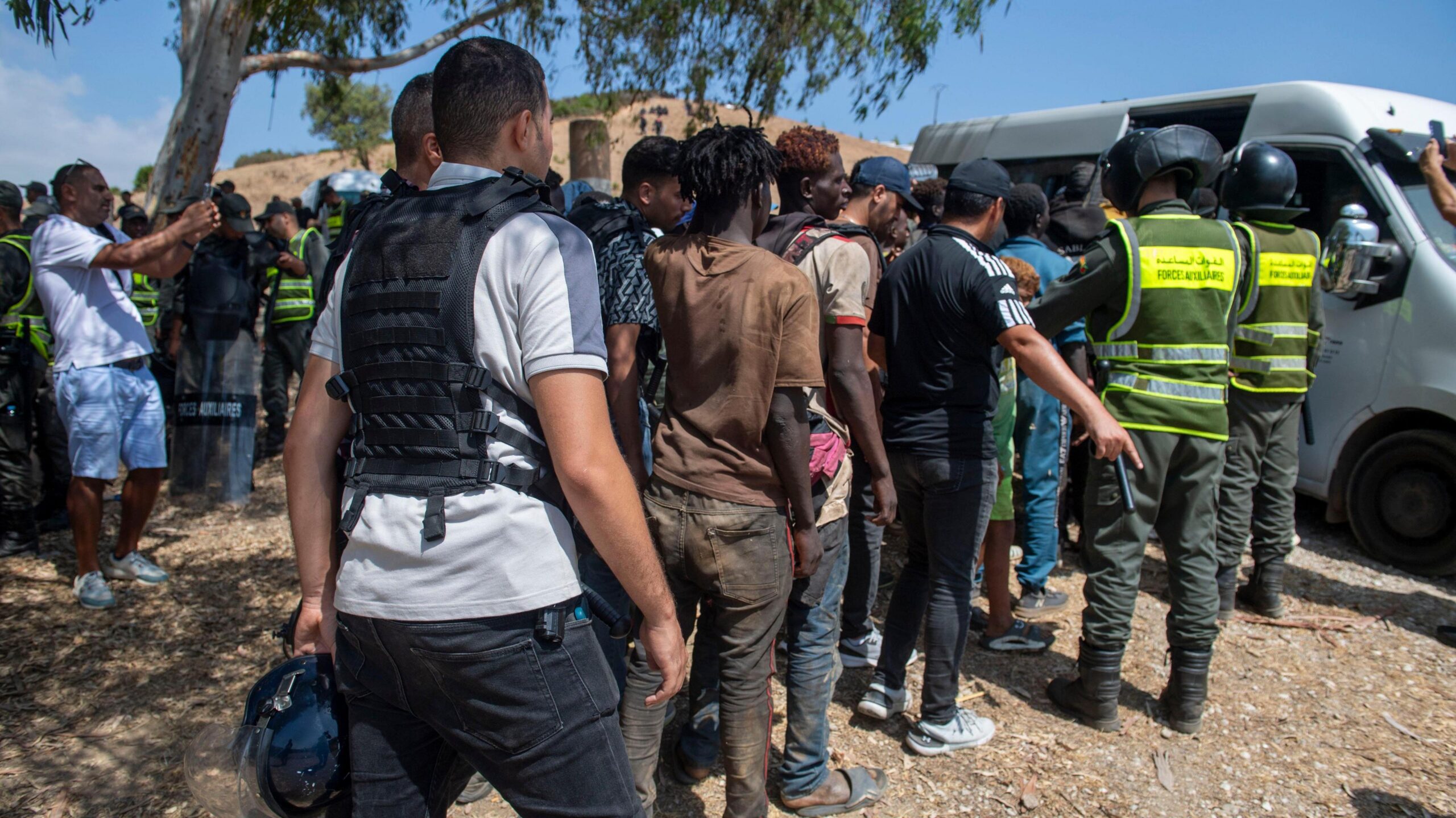
Moroccan authorities stopped dozens of people attempting to reach Spain’s North African exclave of Ceuta over the weekend, according to reports.
Security sources told Spanish media and Reuters that 111 people were intercepted in and around Fnideq, known in Spanish as Castillejos, about 3km from the border. Most were from sub-Saharan Africa. Officers, some in riot gear, used tear gas to break up groups gathered on nearby hills.


The operation came two weeks after an unusually large arrival by sea. City officials said around 78,000 people reached Ceuta in a matter of hours in late July. The mayor reported that 100 people died in that surge and that most of those who arrived had since been returned to Morocco.
Since then, both Morocco and Spain have increased patrols. Morocco deployed army troops, navy speedboats and drones on Saturday. On the Spanish side, officials said security at the Tarajal crossing was “10 times stronger than the previous day” and more than 1,500 officers were sent to the area. Spain has also added a metal fence and a floating barrier.
Morocco’s government said earlier this week it was tracking social media posts urging another mass crossing on Saturday, and warned it would prosecute organizers and participants.
The July influx has also strained relations inside the EU. Italy temporarily reinstated border checks for travelers coming from Spain and was supported by Finland and Denmark. The Czech Republic even called for Spain’s Schengen membership to be suspended.
Spain pushed back, pointing out that Ceuta is not part of the Schengen zone, so arrivals there cannot travel freely to mainland Europe. Prime Minister Pedro Sánchez blamed traffickers and urged Italy to lift its controls. Italy’s Foreign Minister Antonio Tajani said on Saturday the checks were precautionary.
“We’re not waging any kind of ‘battle’ against Spain, we’re simply carefully controlling arrivals,” Tajani said. “Instead of worrying about us, Spain should worry about Morocco: that’s where the problems are coming from.”
Tensions have eased since late July, but authorities on both sides of the border remain on alert.