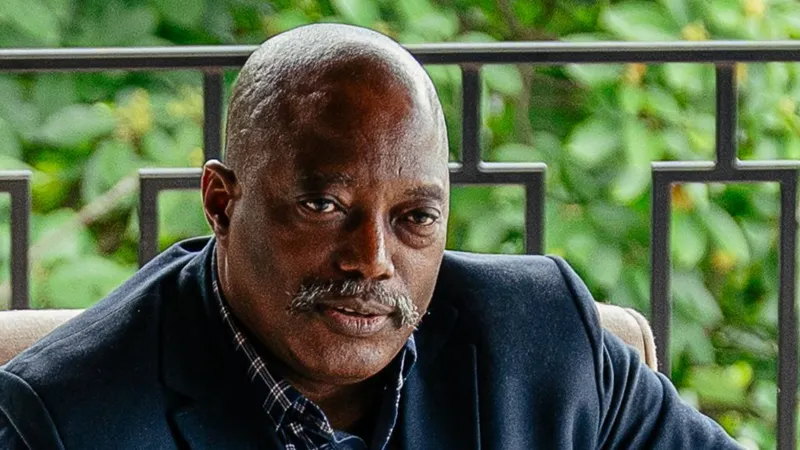
The United States has imposed sweeping sanctions on former Democratic Republic of Congo President Joseph Kabila, accusing him of backing the M23 rebel group.
Washington alleges Kabila provided financial support, encouraged defections from the Congolese army, and even “sought to launch attacks” on the military from outside the country.


The 54-year-old, who led DR Congo for 18 years from 2001, has not responded to a BBC request for comment.
The US Treasury said the sanctions are part of a wider effort to support last year’s US-brokered peace deal between DR Congo and Rwanda. In March, Washington also sanctioned several Rwandan army commanders, citing support for the M23.
Kigali denies backing the rebels, despite what the US describes as overwhelming evidence, and says its military presence in the region is a defensive measure against armed groups in DR Congo.
The Treasury statement alleged Kabila was aiming to destabilise Kinshasa and position an opposition candidate to regain political influence.
Under the measures, all of Kabila’s assets in the US are frozen. American citizens and companies are barred from doing business with him. Banks and foreign partners were warned that even indirect dealings could carry heavy civil or criminal penalties.
The US said the sanctions are designed to force behavioural change and also bolster a regional economic agreement that “enhances transparency in critical minerals supply chains.”
Last December, the US and DR Congo agreed to a partnership to increase access to the region’s vast deposits of minerals such as cobalt, coltan, and copper.
Kabila’s current whereabouts are unknown, but he appeared in the M23-held city of Goma 12 months ago.
Last September, a Congolese military court sentenced him to death in absentia for war crimes and treason over his alleged support of the M23. Kabila denied the charges and did not appear in court, calling the case “arbitrary.”
Eastern DR Congo has faced years of conflict involving multiple armed groups. In early 2025, the M23 made major advances, capturing large areas of the mineral-rich region, including its biggest cities.