The United States Secretary of War, Pete Hegseth, has claimed that recent American military operations in Nigeria were carried out under President Donald Trump’s directive to protect Nigerian Christians allegedly targeted by ISIS-linked terrorists.
Hegseth made the remarks during a White House press briefing on Wednesday, stating that the directive led to the killing of an Islamic State commander identified as Abubakar Mainok, also known as Abu-Bilal Al-Minuki, along with over 100 other ISIS operatives in the North-East.

He said the US Africa Command carried out the operations in line with Trump’s “unwavering commitment” to protecting Christians, adding that intelligence reports linked the group to attacks on civilians and threats against the US homeland.
“He heard the calls that Nigerian Christians were being targeted by ISIS in Nigeria and said, Pete, I want the war department to focus on ensuring that we do everything we can to protect those Christians,” Hegseth said.
However, the claim has renewed controversy over how the US frames the security crisis in Nigeria, particularly in relation to religious persecution narratives.
Reports indicate that the slain ISIS commander was killed during a joint US–Nigeria operation on Lake Chad islands, an area far from regions previously cited by US officials as hotspots of alleged anti-Christian attacks.
In recent years, some US lawmakers and Christian advocacy groups have described violence in parts of Nigeria as “religious persecution,” particularly in the North-Central region, including Benue and Plateau states. Nigerian officials and analysts, however, have repeatedly argued that the violence is complex, involving terrorism, communal clashes, and criminal activity affecting both Muslims and Christians.
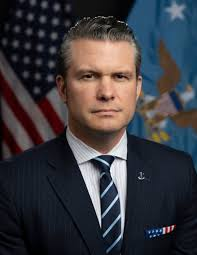
Hegseth also claimed the killed commander was a senior ISIS figure in Nigeria responsible for targeted killings and attempts to threaten US interests.
Former President Donald Trump described the operation as a “meticulously planned and very complex mission” carried out in coordination with Nigerian authorities.
The development comes after months of fluctuating US–Nigeria relations, which previously included tensions over human rights concerns and visa restrictions before evolving into renewed security cooperation.
Both countries have since established joint security frameworks, including a Defence Cooperation Roadmap and technical working groups aimed at strengthening military collaboration.
US support has reportedly included surveillance drones and advisory deployments to assist intelligence operations in Nigeria’s North-East region.