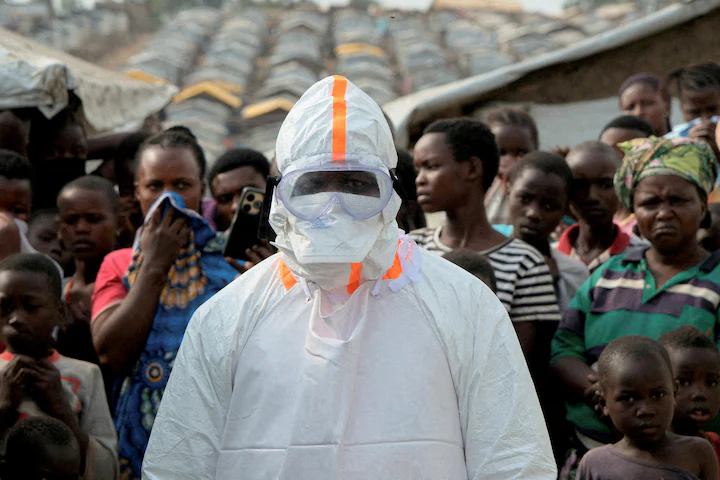
The Ebola outbreak in the Democratic Republic of Congo has now reached two additional northeastern provinces, widening the area affected by the country’s 17th outbreak.
According to a report released July 11 by Congo’s National Institute of Public Health, cases have been confirmed in Haut-Uele and Tshopo. The update pushes the national total to 1,926 confirmed cases and 702 deaths as of late Sunday.

Tshopo recorded four cases, including two deaths. Haut-Uele reported one confirmed death. Health officials said early investigations suggest the infections in both provinces were imported from Niania in Ituri province, where the outbreak has been most concentrated since it was declared on May 15. Despite the apparent link, authorities are now treating both Haut-Uele and Tshopo as active epidemic zones.
The outbreak had previously been centered in Ituri, with additional cases in North Kivu and South Kivu. The expansion raises concern because Tshopo’s capital, Kisangani, is one of Congo’s largest cities. Haut-Uele also shares borders with South Sudan and the Central African Republic.
A photo from the Kigonze displaced persons camp showed at least 30 burials of suspected Ebola victims last month, a sign officials say points to how quickly the virus can spread in crowded settings.
The disease spreads through direct contact with bodily fluids from infected people or animals. Symptoms include high fever, vomiting, and internal and external bleeding, and it is often fatal.
A senior World Health Organization official warned last week that official figures may be undercounting the outbreak. The official told Reuters the real number of cases could be two to four times higher, because about four out of five new patients cannot be traced to a known contact.
Contact tracing in Tshopo and Haut-Uele began in late June, but this is the first time both provinces have appeared in the government’s daily Ebola reports.