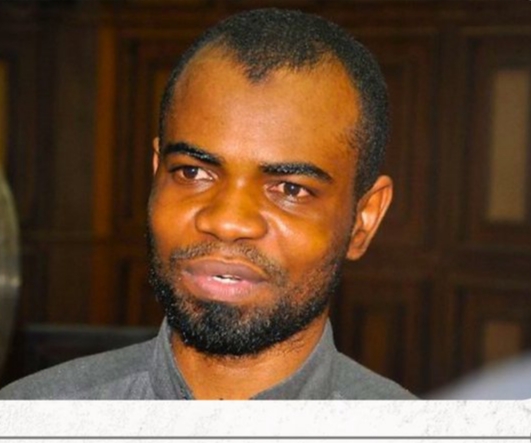
More than 12 years after his conviction, Kabiru Umar, also known as Kabiru Sokoto, has been given a new chance to challenge the life sentence handed down by a Federal High Court in Abuja.
On August 20, 2026, the Court of Appeal in Abuja approved an application for an extension of time, allowing Sokoto 21 days to file his Notice and Grounds of Appeal against the December 20, 2013 judgment. The enrolled order, marked Appeal No. CA/ABJ/PRE/ROA/CR/619M1/2026, was sighted by SaharaReporters.


Justices Muhammed Danjuma, Ntong F. Ntong and Ele Ojo Enenche delivered the ruling on the motion filed May 13, 2026. Two other prayers in the application were withdrawn and struck out.
In his affidavit, Sokoto said the delay was due to prolonged incarceration, repeated prison transfers, and the death of two lawyers who previously handled the case. The order was signed by Josephine J. Ekperobe, Deputy Chief Registrar of the Court of Appeal.
The appeal relates to Suit No. FHC/ABJ/CR/38/2013, in which Justice Adeniyi Ademola sentenced Sokoto to life imprisonment. The conviction stemmed from the December 25, 2011 bombing of St. Theresa’s Catholic Church in Madalla, Niger State, which killed at least 37 people. The attack was widely linked to Boko Haram.
However, Sokoto’s legal team says the charge did not allege that he carried out or masterminded the bombing. According to a statement by his lawyer Don C. Akaegbu, the count was that he had prior knowledge of the incident and failed to report it to authorities.
“The distinction between direct participation and alleged prior knowledge is significant in law and forms a central issue in the pending appeal,” the defence stated.
The lawyers added that the appeal will also question the evidence used by the trial court and how Sokoto’s defence was evaluated.
The Court of Appeal’s decision is procedural only. It does not overturn the conviction or rule on the merits of the case. It simply clears the way for Sokoto to file his appeal within the 21-day window.
His legal team, led by E.O. Bamidele with the brief of Don C. Akaegbu, must now file the Notice of Appeal. The Federal Government was represented by D.E. Kasuwe of the Federal Ministry of Justice.
Ordinarily, appeals must be filed within a set timeframe. Because that period has long passed, Sokoto needed the court’s permission to proceed. With that hurdle cleared, the substantive arguments will be heard only after the appeal is formally filed.
The Madalla bombing remains one of Nigeria’s deadliest attacks on a church and continues to be a reference point in the country’s counter-terrorism prosecutions.