Hundreds of Burundians in Kenya are rushing to go home before a government crackdown on unlicensed migrant traders takes effect.
Kenyan President William Ruto set Monday as the cutoff for foreigners running small businesses without proper permits. The trade ministry said some people entered on tourist or investor visas but ended up hawking and running small shops, work reserved for Kenyans.


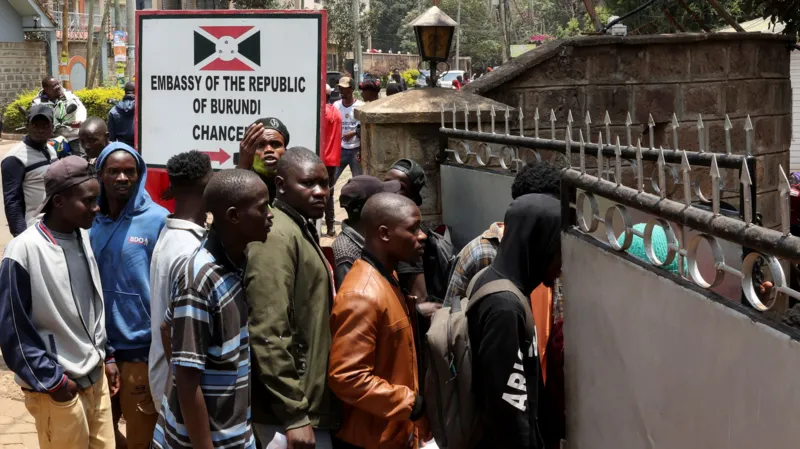
The scramble was visible in Nairobi. Long lines formed outside the Burundi embassy as citizens waited for free emergency travel documents. Others hurried to buy bus tickets, some carrying mattresses and suitcases on their backs.
Kenya hosts hundreds of thousands of East African migrants. The UN estimates about 16,000 Burundian refugees and asylum seekers are in the country, though it’s unclear how many are small traders.
Some Burundians say they can’t afford to leave and are asking the government for more time.
The move follows similar crackdowns in Tanzania last year and growing anti-migrant sentiment in South Africa. Ruto said last week that Kenya welcomes investment, but “not that a person comes from China or elsewhere to be a hawker or open a small shop.” Investors, he argued, should create jobs instead.
His remarks drew mixed reactions. Critics called it populist and said it risks fueling xenophobia. Government officials deny that.
Tensions rose after Burundi’s Foreign Affairs Minister Edouard Bizimana posted on X that “Kenyans in Burundi were living peacefully but if the hate speech against Burundi continues things will certainly change.” He also held an urgent meeting with East African Community representatives and asked Kenya’s ambassador to ensure Burundians’ safety.
On Sunday, Kenya’s Foreign Affairs PS Korir Sing’oei clarified that foreigners with valid work permits and licenses can continue operating.
But the reassurance hasn’t calmed everyone. Alexis Ntinanirwa, head of the Association of Burundians in Kenya, warned the policy could backfire regionally. “There are also Kenyans doing these small jobs in Burundi, Tanzania and Uganda,” he told the BBC. He urged Burundians to stay calm and avoid clashes with police.